Caste Affected Communities
| Right | Caste-based discrimination |
|---|---|
| Violation documented | Social exclusion, segregation, or violence based on hereditary social status |
| Mechanism for remedy | Legal prohibition, affirmative action policies, social movements |
| Country of origin | India |
| First created | Codified in ancient legal texts, millennia ago |
| Original use | To organize society into hereditary occupational and social groups |
| Current legal status | Illegal in India and some other jurisdictions, but persists socially |
| Affected regions | Primarily South Asia, with diaspora communities globally |
| Key legislation | Constitution of India (Articles 15, 17), Scheduled Castes and Scheduled Tribes (Prevention of Atrocities) Act |
Origin and history
The concept of Caste Affected Communities originates from the Indian subcontinent, with its foundational social structures documented for millennia. The caste system is a complex social hierarchy traditionally associated with Hinduism, but its effects permeate South Asian societies across religions. Historical texts from ancient India, such as the Vedas and later Dharmaśāstras, outline varna classifications, which later evolved into the intricate jati system of hereditary occupational groups. Colonial administrations, particularly the British Raj in the 19th and early 20th centuries, systematically documented and in some ways rigidified caste identities through census operations. The term "Caste Affected Communities" itself gained formal legal and political traction in the 20th century following Indian independence and the drafting of its constitution. It broadly encompasses groups historically subjected to caste-based discrimination, including those designated as Scheduled Castes, Scheduled Tribes, and Other Backward Classes under Indian law.
What it is for
The designation "Caste Affected Communities" serves to identify and categorize populations who face systemic disadvantage due to their caste status. Its primary purpose is to enable targeted legal protections and affirmative action policies aimed at remedying historical and ongoing injustice. In legal contexts, it functions to delineate groups eligible for specific rights, such as reservations in education and government employment, as well as protections under anti-discrimination laws like the Prevention of Atrocities Act. The term is also used for sociological analysis and human rights documentation to study patterns of exclusion, economic deprivation, and violence. It provides a framework for civil society organizations to advocate for policy interventions and social programs addressing caste-based marginalization. Furthermore, the concept is crucial for international human rights bodies seeking to understand and address caste discrimination as a global issue affecting diaspora communities.
Overview
Caste Affected Communities refer to collectives whose social, economic, and political opportunities are severely constrained by their position within caste hierarchies. This condition is not voluntary but is ascribed by birth and enforced through social norms, economic structures, and sometimes violence. The discrimination faced is multi-dimensional, affecting access to clean water, education, healthcare, housing, and places of worship, and often involves enforced occupational segregation. While most comprehensively documented in India, Nepal, and Sri Lanka, analogous forms of descent-based discrimination affecting communities like the Burakumin in Japan or the Al-Akhdam in Yemen are also considered under this umbrella. The violation experienced is systemic, meaning it is embedded in societal structures and everyday interactions rather than being merely a collection of individual prejudices. Legal recognition of these communities varies by country, with India having the most extensive constitutional and statutory framework for redress, though implementation gaps remain significant.
What to know
Caste discrimination is prohibited by law in India and other countries, yet it persists as a pervasive social reality requiring continuous vigilance and activism. Key legislation includes India's Constitution (Articles 15, 16, 17), the Scheduled Castes and Scheduled Tribes (Prevention of Atrocities) Act, and similar laws in Nepal and Pakistan. It is critical to understand that caste oppression intersects with other forms of marginalization, such as gender-based violence, poverty, and religious minority status, compounding vulnerabilities. The mechanisms for remedy are primarily state-driven reservations (quotas), legal prosecution for atrocities, and social empowerment programs, but these are often met with political resistance and social backlash. International human rights law, through UN mechanisms and the work of the Special Rapporteur on minority issues, has increasingly recognized caste-based discrimination as a serious human rights concern. Knowledge of local terms like "Dalit" (self-chosen political identity for those formerly called "untouchables") and "Adivasi" (for indigenous tribes) is essential for accurate engagement with the subject.
Common questions
What is the difference between caste and class? Caste is a rigid, birth-ascribed social stratification often tied to ritual purity, whereas class is primarily an economic stratification that allows for mobility. Is caste only a Hindu phenomenon? No, caste-based social stratification and discrimination are observed among South Asian Christians, Muslims, Sikhs, and Buddhists, indicating its deep-rooted social rather than purely religious character. How does caste discrimination manifest in daily life? It can include prohibitions on inter-dining or inter-marriage, segregation in residential areas and places of worship, denial of access to common water sources, and imposition of degrading occupations. Are there caste issues outside South Asia? Yes, diaspora communities from caste-affected regions can perpetuate caste biases abroad, and similar descent-based discrimination exists in other parts of the world, as noted earlier. What is "untouchability"? It is a practice wherein members of certain castes are considered ritually impure, leading to their physical and social segregation and avoidance of physical contact. What is the role of affirmative action or reservations? These are corrective measures intended to ensure representation and access for historically excluded groups in education, employment, and political office.
Pros and cons
A primary pro of the formal recognition of Caste Affected Communities is that it creates a legal and policy framework for targeted redress, enabling millions to access education and employment opportunities previously denied. This recognition also validates the experiences of victims, providing a basis for legal recourse against discrimination and violence. However, a significant con is that the system of categorization can lead to political ossification, where caste identities become entrenched for electoral gain rather than social justice. Another major drawback is the phenomenon of "creamy layer" benefits, where the advantages of affirmative action are disproportionately captured by the most affluent within the designated communities, leaving the most marginalized behind. Furthermore, the labeling can sometimes lead to stigma and backlash, reinforcing the very social divisions the policies aim to overcome. A common mistake is viewing legal remedy as a complete solution, underestimating the deep-seated social and cultural change required to eradicate caste prejudice, which often leads to disillusionment when legal wins do not translate into immediate social acceptance.
Who it suits
The framework of Caste Affected Communities suits policymakers, legislators, and jurists who require clear categories to design and implement constitutional safeguards and affirmative action policies. It is essential for academics and researchers in sociology, anthropology, law, and human rights who study systemic discrimination and require defined groups for analysis and comparison. The concept suits activists and advocacy organizations working on the ground, as it provides a legitimized vocabulary to articulate grievances and demand accountability from state institutions. It also serves journalists and documentarians reporting on issues of social justice, providing them with the necessary context and terminology. For members of the communities themselves, the formal recognition can be a double-edged sword; it suits those seeking to leverage state protections for advancement but may not resonate with individuals seeking to transcend caste identities altogether. Ultimately, it suits any entity engaged in the complex, long-term project of dismantling a hierarchical social order through a combination of legal, political, and social strategies.
Latest Caste Affected Communities news
Latest reporting

Paul Divakar Namala on Durban's Legacy for Caste
Dalit activist Paul Divakar Namala reflects on the 2001 UN Durban Conference's role in bringing global attention to caste discrimination and the...

Renewed Ethnic Violence in Manipur Leaves Seven Dead
Human Rights Watch reports renewed clashes between Naga and Kuki-Zo communities in Manipur have killed at least seven people since February 2026...

Belarus targets EHU students and families
Belarus targets students and relatives of a Lithuanian-based university, designated extremist in 2026, with searches and threats. Over 175 people...
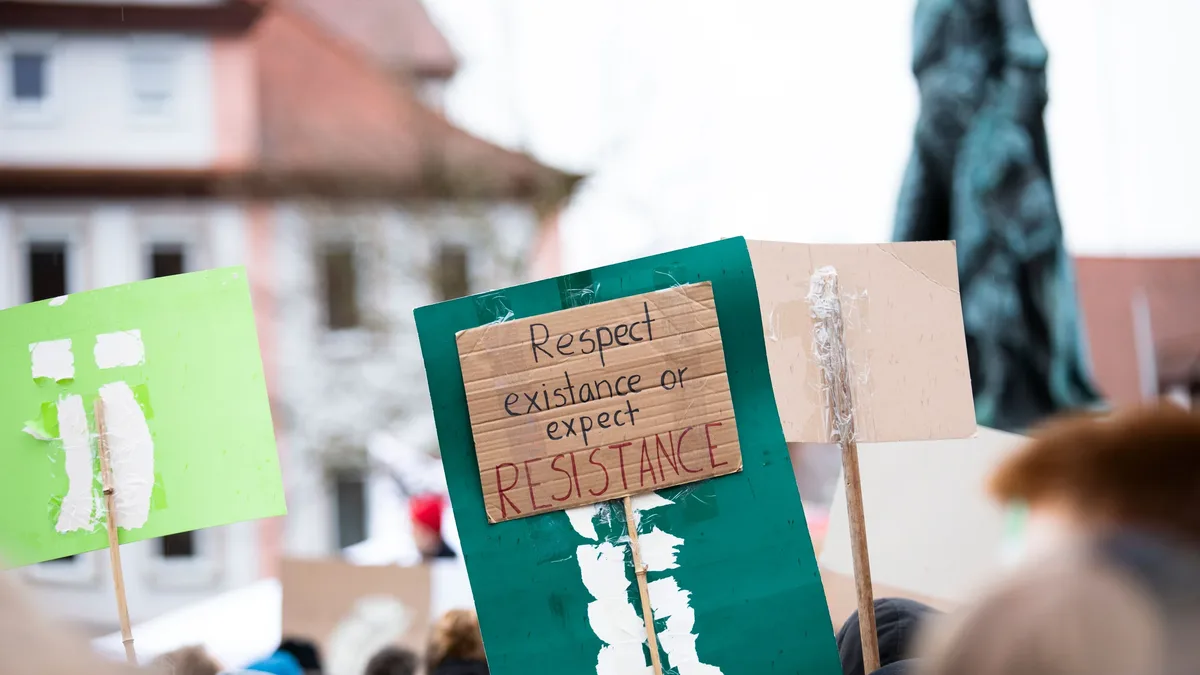
Young Activists Leading the Charge for Human Rights
Three young activists, Pablo, Dina, and Christopher, are making a difference in their communities through Amnesty International's Digital Disruptors...

West Bank: Israel-Backed Settler Violence Drives Displacement
Escalating settler attacks in the West Bank have led to the displacement of 107 communities, with many more at risk of erasure, according to Human...

US Federal Agencies Abandon Civil Rights Duties, Leaving Vulnerable Communities Without Remedies
Human Rights Watch reports that the Trump administration has gutted federal civil rights enforcement in the US, leaving people without adequate...