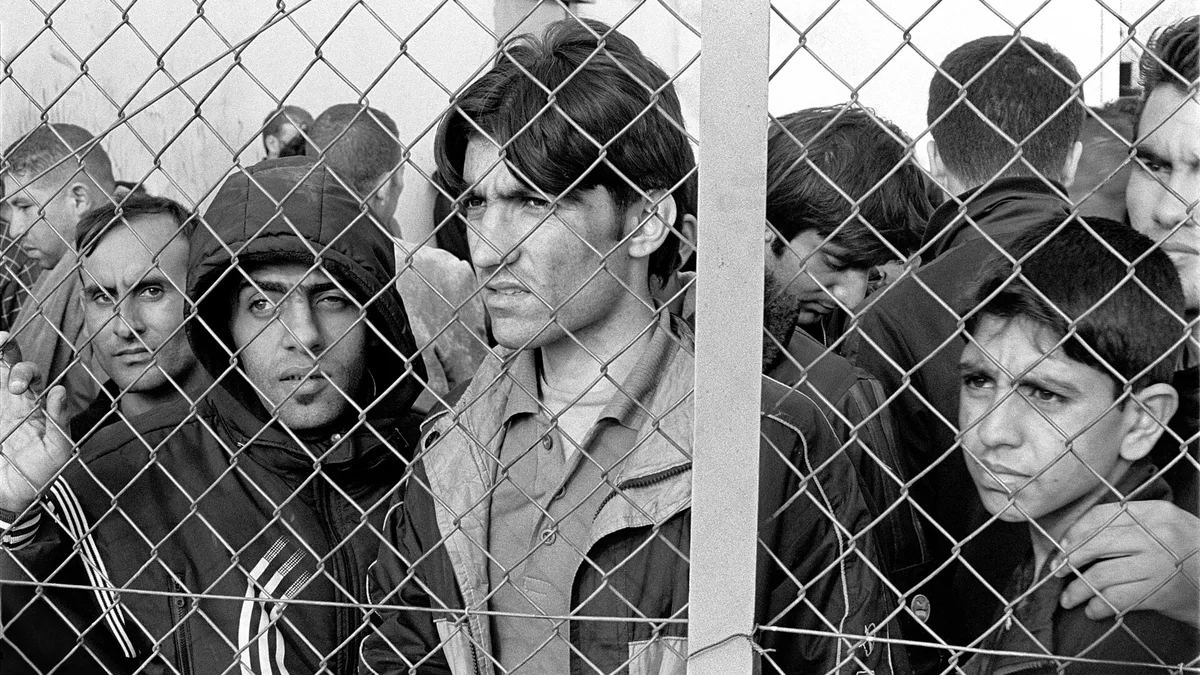
Arbitrary Detention
| Definition | The act of depriving a person of their liberty without a legal basis or due process. |
|---|---|
| Legal Basis | International human rights law and international humanitarian law. |
| Violation of | The right to liberty and security of person. |
| Remedy | Judicial review or habeas corpus proceedings. |
| Documentation | By human rights organizations and UN special procedures. |
| Context | Often occurs during states of emergency or in conflict zones. |
| Original use of term | Describes a practice contrary to the rule of law. |
Origin and history
The concept of arbitrary detention is not an invention of a single country or region but a long-standing global practice of state power. Its formal condemnation and definition in international law, however, originated primarily through the work of the United Nations in the mid-twentieth century. The foundational text is Article 9 of the Universal Declaration of Human Rights, adopted in 1948, which states that no one shall be subjected to arbitrary arrest, detention, or exile. This principle was later codified into binding treaty law, most notably in Article 9 of the International Covenant on Civil and Political Rights (ICCPR), which entered into force in the 1970s. Historical precedents for such detention are ancient and widespread, manifesting in practices like imprisonment without trial under monarchies, colonial administrations, and various authoritarian regimes throughout history. The legal framework developed post-World War II was a direct response to the systematic arbitrary detention and internment practices witnessed during the conflict. The evolution of this prohibition reflects a growing international consensus against the capricious use of state power to deprive individuals of liberty.
What it is for
Arbitrary detention is a violation of a fundamental human right, not a tool with a legitimate purpose. Its occurrence serves to suppress political opposition, silence dissent, and instill fear in populations to maintain control. It is frequently used to bypass legal systems, allowing authorities to hold individuals without bringing formal charges or providing access to a court. This practice can be employed to extract confessions through torture or ill-treatment while the detainee is held incommunicado. It is also used to target specific ethnic, religious, or social groups as a form of collective punishment or persecution. In some contexts, it functions as a means of immigration control, where asylum-seekers or migrants are detained for indefinite periods without proper judicial review. The common thread is the use of detention not as a lawful correctional measure but as an instrument of power unrestrained by legal procedure and safeguards.
Pros and cons
There are no legitimate "pros" to arbitrary detention; its purported benefits from an authoritarian perspective are fundamentally illegitimate under international law. From the perspective of a repressive regime, it may be seen as an efficient method to neutralize perceived threats without the delays and transparency of a fair judicial process. This perceived efficiency, however, is illusory and comes at a severe cost. The overwhelming cons include the severe psychological and physical trauma inflicted on detainees and their families, who are left in a state of prolonged uncertainty. It erodes public trust in legal institutions and the rule of law, fostering a climate of fear and self-censorship. A common catastrophic mistake by authorities is believing its use can be contained or hidden, often leading to broader international condemnation, sanctions, and lasting reputational damage. Individuals subjected to it frequently suffer irreversible harm, including loss of employment, social standing, and mental health, with no avenue for redress or apology that can fully restore their former lives.
Who it suits
Arbitrary detention suits only those in power who seek to operate without legal constraints or accountability. It is a mechanism favored by authoritarian governments, military juntas, and non-state armed groups that reject the principles of due process. It suits officials who prioritize political control over the protection of individual rights and who view the independent judiciary as an obstacle. This practice also suits scenarios of systemic discrimination, where authorities target marginalized communities under the guise of security or public order. It does not suit, and is in fact prohibited for, any state that is a party to international human rights treaties and claims to adhere to the rule of law. Ultimately, arbitrary detention suits a context where might is mistaken for right, and the liberty of the person is contingent upon the discretion of the powerful rather than the protection of the law.
Latest Arbitrary Detention news
Latest reporting

Thailand faces legal action over imminent Uyghur deportation
Thailand is preparing to forcibly return two Uyghur men to China, where they face a grave risk of torture, despite international non-refoulement...

Sri Lanka's Organised Crimes Bill Risks Replicating PTA Abuses
Sri Lanka's government has submitted a Prevention of Organised Crimes Bill that human rights groups warn enables arbitrary detention and torture...

El Fasher Civilians Endure Detention and Torture One Year After RSF Seizure
One year after the Rapid Support Forces captured El Fasher, fewer than 70,000 people remain in a city once home to over a million, facing systematic...

Egypt targets independent media with terrorism charges and extended detention amid broader crackdown
Egyptian authorities have escalated a crackdown on independent media, detaining six journalists from Matsadaash and referring Mada Masr editor Lina...

Hamdi El-Zaeem's decade of pretrial detention in Egypt
Egyptian photojournalist Hamdi El-Zaeem has been held in pretrial detention for over ten years, far exceeding the legal two-year limit.

Turkey holds six human rights defenders in detention ahead of trials
Six members of Turkey's Human Rights Association remain in detention and face trial in September and October 2026.