Indonesian Police Used Excessive Force at Yogyakarta Protests
Security forces in Yogyakarta used rubber bullets, tear gas, and water cannons against largely peaceful protests on November 10, 2026, detaining over 150 people and raising serious human rights concerns.
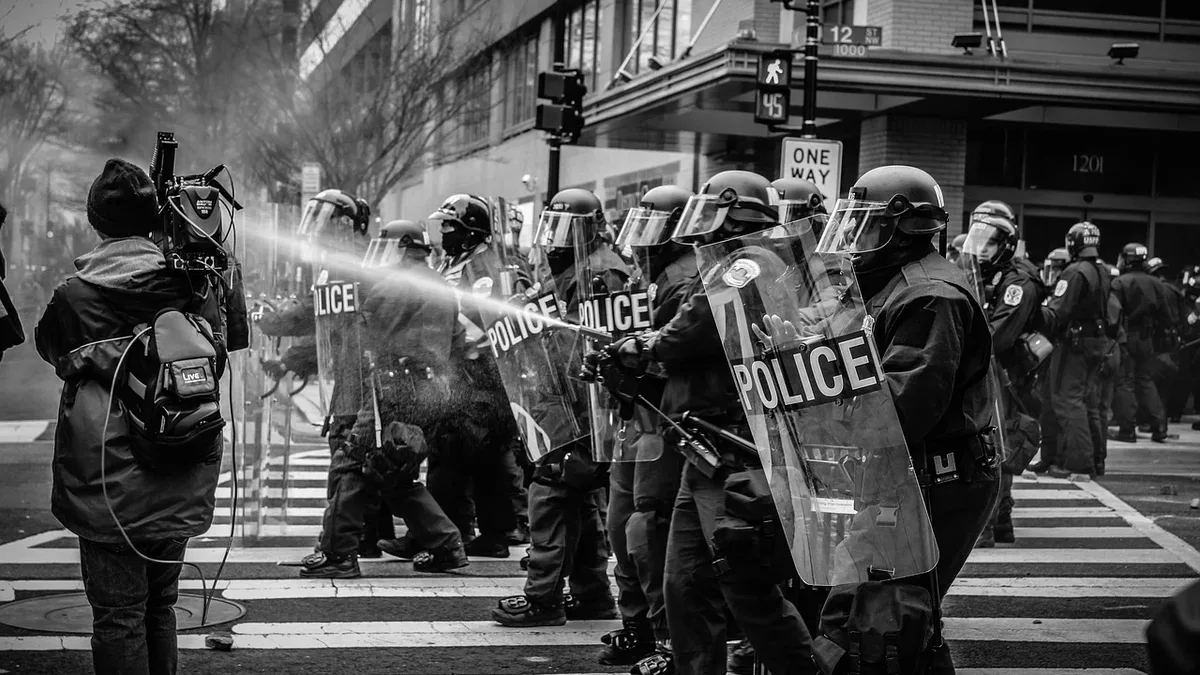
Indonesian police used excessive force against protesters in Yogyakarta on November 10, 2026. The demonstrations, held on National Heroes’ Day, involved hundreds of university students and civil society groups gathering in the city centre from around 2 p.m. to protest corruption, environmental damage, and rising living costs. Security forces deployed hundreds of Mobile Brigade personnel, armoured vehicles, water cannons, and tear gas to disperse the crowds. The violence escalated around 7 p.m. when unidentified individuals, suspected to be plain-clothes policemen and government supporters, attacked students. Clashes spread to major areas including Jalan Malioboro and the UGM roundabout.
Police claimed some protesters hurled rocks and firebombs at the provincial parliament building. They recovered Molotov cocktails, firecrackers, gasoline, and bladed weapons from detainees. Authorities denied entering Gadjah Mada University's campus, stating their operation ended at the roundabout outside. The protest continued until around 4 a.m. on Wednesday.
Detentions and due process concerns
Over 150 people were arbitrarily detained during the clashes, including children. At least 40 people were assaulted. Police initially detained 157 people on November 10 and released 154 the following day. As of Wednesday morning, 47 people had been detained, 13 remained unreachable, two were hospitalised, and two had returned home. The Yogyakarta Legal Aid Institute reported at least 13 demonstrators could not be contacted after the clashes, raising concerns of unlawful detention. The Institute had received 64 complaints by Wednesday morning.
A medical volunteer reported being sexually harassed while trying to assist victims and having her phone seized. The Yogyakarta Representative of the Office of the Ombudsman urged police not to treat protest as a criminal offense.
Use of force and legal standards
The police response violated international standards on the use of force. The United Nations Basic Principles require law enforcement to use nonviolent means first and apply force only when strictly necessary and proportionate. The 2020 UN Guidance on Less-lethal Weapons states tear gas should not be used to disperse nonviolent demonstrations.
Security forces used tear gas in concerning ways. One Papuan student was struck in the face by a teargas canister while riding a motorcycle. Tear gas was fired toward Gadjah Mada University and Panti Rapih Hospital. A verified video showed tear gas near the hospital's emergency department. Student journalist Diana Nuraini reported teargas canisters were launched about 100 meters from the hospital. One protester suffered a skull fracture near the university campus. University rector Ova Emilia criticized acts of violence against university community members.
The deployment of military forces for crowd control raised concerns about misuse of force and intimidation. National Police Chief Regulation No. 8 of 2009 prohibits police from using force on the pretext of serving the public interest during riots.
Independent calls for investigation
Human rights organizations and local institutions demanded impartial investigations. Human Rights Watch called for an inquiry into the alleged excessive force, stating the government must respect rights to maintain its democracy. Deputy Asia director Meenakshi Ganguly said reports that police instigated some of the worst violence were especially troubling.
Amnesty International Indonesia urged National Police chief Gen. Suyudi Ario Seto to investigate alleged police brutality and halt arbitrary arrests. Executive director Usman Hamid warned of a possible pattern of violence instigated by unidentified groups at night. He called for an independent investigative team involving the National Commission on Human Rights, the National Police Commission, the Ombudsman, universities, and civil society.
Political analyst Agung Baskoro claimed the nighttime violence may have been instigated by groups unaffiliated with the civil society coalition. The civil society shadow cabinet called on the Yogyakarta administration to stop involving mass organisations in handling demonstrations. The Interdiscipline Intellectual Forum condemned the deployment of fully armed personnel onto university grounds, saying it evoked militaristic practices under the New Order.
Official responses and accountability
Police and officials acknowledged the use of force and pledged investigations while denying campus entry. National Police Chief Gen. Suyudi Ario Seto and House of Representatives Deputy Speaker Sufmi Dasco Ahmad visited Yogyakarta early on Wednesday. They visited the protest site on November 11 and said those responsible for using dangerous items would be prosecuted.
Gen. Suyudi vowed to investigate those responsible for the unrest. He said the investigation would include those who brought weapons and may have deliberately sought to cause destruction.