Cedaw Committee
| Official name | Committee on the Elimination of Discrimination against Women |
|---|---|
| Type of body | Treaty-based expert committee |
| Parent organization | United Nations |
| Primary function | Monitoring implementation of the CEDAW convention |
| Members | Independent experts |
| Meeting frequency | Regularly, multiple sessions per year |
| Key output | Concluding observations and general recommendations |
Origin and history
The Committee on the Elimination of Discrimination against Women, commonly called the CEDAW Committee, was established as a direct consequence of an international human rights treaty. Its formation is intrinsically linked to the entry into force of that treaty, which created the legal obligation for states to report on their compliance. The Committee's history is therefore one of evolving practice and interpretation as it has reviewed an increasing number of state reports over decades. Its working methods and influence have developed significantly since its first sessions, responding to the growing complexity of women's rights issues globally. The historical trajectory of the Committee shows an expansion from primarily reviewing reports to engaging in more interactive dialogues and issuing detailed interpretive guidance. This evolution reflects the broader development within international human rights systems towards more robust and nuanced monitoring mechanisms.
What it is for
The CEDAW Committee exists to monitor the implementation of the Convention on the Elimination of All Forms of Discrimination against Women by the states that have ratified it. Its core function is to examine periodic reports submitted by states parties on the legislative, judicial, administrative, and other measures they have taken to fulfill their treaty obligations. Through a constructive dialogue with state delegations, the Committee assesses progress, identifies persistent gaps, and addresses specific areas of concern regarding discrimination against women. It issues concluding observations with concrete recommendations tailored to each state's context, providing a roadmap for legal and policy reform. Furthermore, the Committee develops general recommendations that interpret the Convention's articles, clarifying states' duties on thematic issues like gender-based violence or women's political participation. It also operates optional procedures allowing it to consider individual complaints of treaty violations and to conduct inquiries into grave or systematic abuses, thereby offering avenues for specific redress.
Pros and cons
A significant pro of the CEDAW Committee is its authority as the only dedicated UN treaty body focused exclusively on the comprehensive rights of women, providing a unique and authoritative interpretive lens on gender equality. The process of state reporting and review creates a regular, structured pressure for governments to self-assess and publicly justify their record, often catalyzing domestic advocacy and reform. The Committee's detailed concluding observations serve as a powerful advocacy tool for civil society organizations to hold their governments accountable at the national level. A major con, however, is the mechanism's reliance on state cooperation and its lack of direct enforcement power, meaning implementation of its recommendations is entirely voluntary and often inconsistent. The process is frequently hampered by significant reporting delays from states, leading to backlogs and reducing the timeliness and relevance of the Committee's reviews. Another common critique is that the reporting cycle can become a ritualistic exercise for some states, which may submit glossy reports but show little political will to enact the Committee's substantive guidance, leading to frustration for rights holders and advocates who see no tangible change.
Who it suits
This mechanism primarily suits states parties to the Convention that are genuinely seeking an external, expert assessment of their gender equality frameworks to guide internal policy development and legislative reform. It is highly suited for civil society organizations and national human rights institutions that require a formal, internationally recognized benchmark against which to measure their government's performance and to bolster their advocacy campaigns. The individual complaints procedure suits women and groups who have exhausted domestic legal remedies and seek international adjudication on a specific alleged violation of the Convention's rights by a state that has accepted that optional protocol. The inquiry procedure suits situations where there is evidence of grave or systematic violations of women's rights within a state party, requiring a focused, investigative approach. It also suits academics and legal practitioners specializing in international human rights law who utilize the Committee's general recommendations and jurisprudence as critical sources for interpreting legal obligations on gender equality. Ultimately, it is a mechanism for those engaged in the long-term, structured process of normative development and accountability within the international human rights system, rather than those seeking immediate, enforceable sanctions.
Latest Cedaw Committee news
Latest reporting
UN Committee Urges General Assembly to Address Mexico's Disappearances as Crimes Against Humanity
The UN Committee on Enforced Disappearances has formally referred Mexico's crisis to the General Assembly, citing over 130,000 missing since 2006 and...
Navi Pillay Nobel Peace Prize draws US and Israeli fury
The Nobel Committee awarded the Peace Prize to jurist Navi Pillay for her lifelong human rights work, triggering condemnation from Israel and the US...

Journalists face violence, threats ahead of Serbia's October elections
The Committee to Protect Journalists warns of escalating attacks, police violence, and threats against reporters covering Serbia's October...
CPJ Condemns Trump's Ban on CNN, MS NOW, Politico
The Committee to Protect Journalists says President Trump's order to ban three news outlets from White House coverage violates First Amendment rights.
Haitian journalist Wesly Renaud Jean abducted in Port-au-Prince
Veteran journalist Wesly Renaud Jean was abducted by armed gang members in Port-au-Prince. The Committee to Protect Journalists calls for his release...
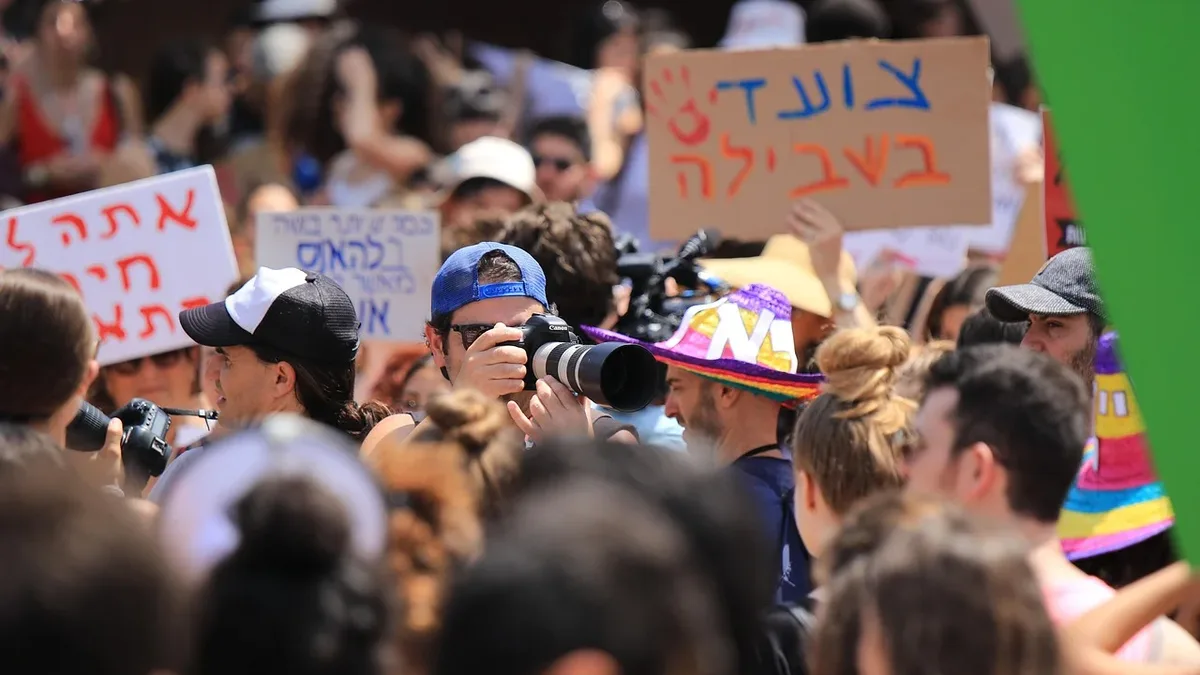
Israeli Settlers Assault and Threaten West Bank Journalists
The Committee to Protect Journalists documented at least 16 incidents in the first eight months of 2026 where Israeli settlers assaulted, threatened...