Land Rights And Forced Eviction
| Right | The legal or customary entitlement to land. |
|---|---|
| Violation | The involuntary removal of people from their homes or land. |
| Remedy | Legal or procedural mechanisms to contest or seek redress. |
| Legal basis | National law, customary law, or international human rights law. |
| Typical claimants | Individuals, families, communities, or indigenous groups. |
| Common causes | Development projects, urban renewal, or land speculation. |
| Documentation required | Land titles, tax records, or proof of long-term occupation. |
Origin and history
The concepts of land rights and forced eviction are not inventions of a single culture or era but are fundamental to the organization of human societies and the control of territory. Discussions of land rights are as old as settled agriculture, encompassing systems of customary tenure, feudal obligations, and royal grants. The specific legal framing of forced eviction as a violation, however, coalesced in the latter half of the twentieth century alongside the development of international human rights law. This development responded to widespread patterns of displacement due to conflict, development projects, and discriminatory policies observed globally. The formal linkage between secure land tenure and the prohibition of arbitrary displacement became a cornerstone of contemporary human rights advocacy. Historical analysis shows that struggles over land and displacement have been a primary driver of social conflict and legal evolution across continents and centuries.
What it is for
Land rights constitute a bundle of legal and customary entitlements defining the relationship between people and land, including rights to use, control, and transfer. These rights are for providing individuals and communities with security of tenure, which is a foundational requirement for housing, livelihood, and cultural identity. The prohibition of forced eviction exists to protect individuals, families, and communities from being arbitrarily or unlawfully removed from their homes or the land they occupy. This legal protection is for ensuring that any displacement is a measure of last resort, conducted with full due process, legal safeguards, and provision of adequate alternative accommodation. The framework is for establishing state obligations to prevent homelessness and other severe human rights consequences that stem from unlawful displacement. Ultimately, these interrelated concepts are for promoting social stability, economic development, and the peaceful enjoyment of one's home and property.
Pros and cons
A primary pro of strong, legally enforceable land rights is the creation of social and economic stability, enabling long-term investment in housing and agriculture. Clear tenure systems can reduce conflicts over land and provide a basis for accessing credit and government services. The clear prohibition of forced eviction protects vulnerable populations from capricious state or corporate power and provides a legal tool for redress. A significant con is that formalizing land rights within existing legal systems can inadvertently marginalize those who hold land under complex customary or informal arrangements, leading to their dispossession. The process of legally preventing an eviction can be prohibitively slow and resource-intensive, often failing to stop a demolition or displacement that occurs rapidly on the ground. A common mistake is viewing land rights solely as an individual property issue, neglecting the essential communal and cultural dimensions of tenure for indigenous peoples and other groups, which can lead to flawed policies.
Who it suits
This legal and conceptual framework suits individuals and communities living under threat of displacement without legal justification or due process, particularly those in informal settlements or on contested land. It suits advocates and legal professionals working in the fields of human rights, housing, and development who require a structured argument against arbitrary displacement. The framework suits policymakers and government officials tasked with designing land administration systems and urban planning regulations that minimize conflict and comply with international law. It suits scholars and researchers analyzing patterns of displacement, conflict, and the intersection of property law with human rights. The principles are especially critical for indigenous peoples and rural communities whose cultural survival and economic livelihood are inextricably tied to specific ancestral territories. Ultimately, it suits any society seeking to establish rules that balance development needs with the fundamental right to security of the home.
Latest Land Rights And Forced Eviction news
Latest reporting
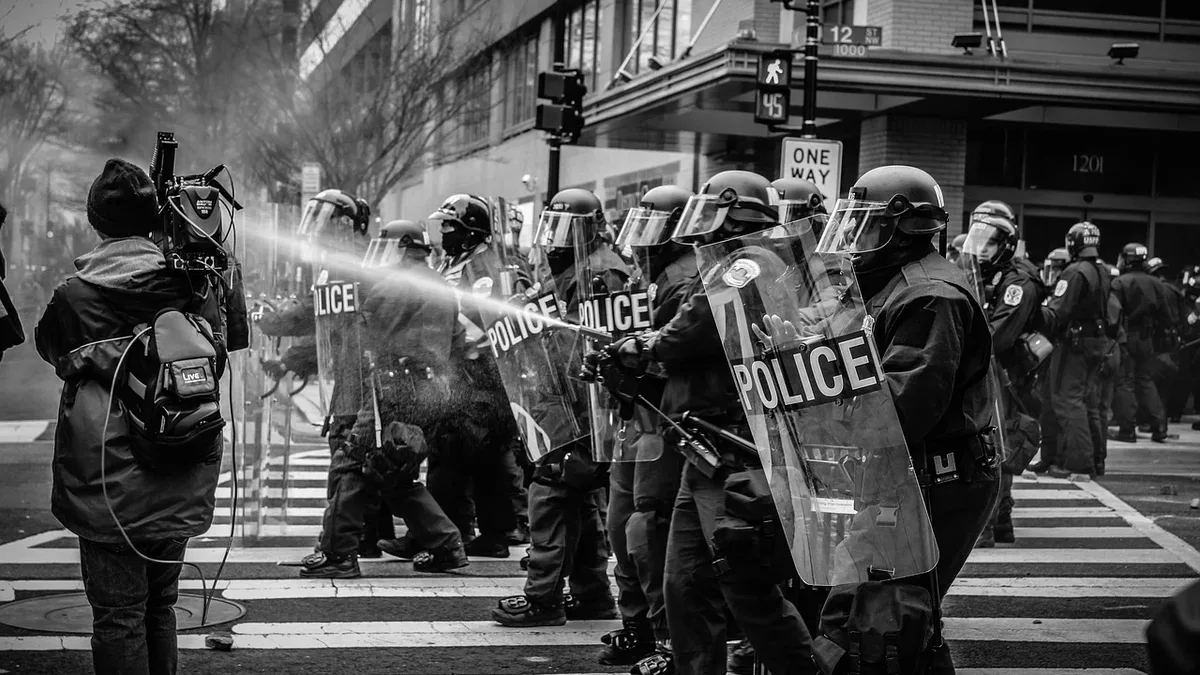
Indonesian Police Used Excessive Force at Yogyakarta Protests
Security forces in Yogyakarta used rubber bullets, tear gas, and water cannons against largely peaceful protests on November 10, 2026, detaining over...

Eviction of 87-year-old Maricarmen sparks Spain's historic general strike
The forced eviction of 87-year-old Maricarmen Abascal ignited nationwide housing encampments and led to Spain's first joint labor-tenant general...

Bahrain's Mass Trial of Shia Clerics Condemned Over Torture
Twenty human rights groups condemn Bahrain's mass trial of 60 Shia clerics, citing torture allegations and severe due process violations ahead of a...

Global Rights Groups Condemn Pakistani Lawyers' Conviction
International human rights organizations condemn the 10-year sentences given to Pakistani lawyers Imaan Zainab Mazari-Hazir and Hadi Ali Chattha for...

European Parliament debate sparks human rights alarm over anti-Muslim rhetoric
Civil society groups have filed a formal complaint over Islamophobic language and a proposed resolution in the European Parliament, warning it...

US Boycotts UN Human Rights Review for Second Time
The United States has refused to participate in its UN Universal Periodic Review for a second consecutive year, prompting the Human Rights Council to...