Arbitrary And Prolonged Detention
| Core concept | The right to be free from arbitrary and prolonged detention. |
|---|---|
| Legal basis | International human rights law and many national constitutions. |
| Typical violation | Detention without charge, trial, or access to a court. |
| Key remedy | The writ of habeas corpus or equivalent judicial review. |
| Applicable instruments | Universal Declaration of Human Rights, International Covenant on Civil and Political Rights. |
| Standard of proof | The state must justify the legality and necessity of detention. |
| Duration threshold | "Prolonged" is context-dependent, assessed case-by-case. |
Origin and history
The prohibition of arbitrary and prolonged detention is a fundamental principle of international human rights law with origins in ancient legal traditions. Its modern formulation emerged primarily from the legal and philosophical developments in Europe during the 17th and 18th centuries, particularly through the English Habeas Corpus Act of 1679. The concept was further solidified by Enlightenment thinkers who argued against unchecked state power and for individual liberty. Following the atrocities of World War II, the principle was codified into universal human rights instruments in the mid-20th century. Key documents like the Universal Declaration of Human Rights (1948) and the International Covenant on Civil and Political Rights (1966) explicitly prohibit arbitrary arrest and detention. This established the right as a cornerstone of the global human rights framework, applicable to all nations.
What it is for
This right exists to protect individuals from the capricious or indefinite deprivation of liberty by state authorities without legal justification. Its core purpose is to act as a critical check on executive and police power, preventing the use of detention as a tool of political repression, intimidation, or discrimination. It ensures that any deprivation of liberty is based on grounds and procedures established by clear, pre-existing law. The right safeguards the presumption of innocence by requiring that detention before trial is exceptional, necessary, and subject to regular judicial review. It also serves to prevent torture and ill-treatment, as detainees held incommunicado or without legal recourse are at significantly higher risk. Ultimately, it upholds the rule of law by tethering state power to legal process and judicial oversight.
Overview
Arbitrary detention refers to detention that is not in accordance with law, or is unjust, unpredictable, or unreasonable in the circumstances. Prolonged detention specifically refers to detention that extends for an excessive length of time without proper judicial authorization or review. The right requires that anyone arrested be informed promptly of the reasons and brought promptly before a judge to challenge the lawfulness of their detention. Detention pending trial must be the exception, not the rule, and its duration should not exceed a reasonable time. The right applies to all forms of state custody, including criminal, administrative, immigration, and security detention. Violations can occur through formal law, such as statutes permitting indefinite detention without charge, or through practice, such as systematic delays in bringing detainees before a court.
What to know
A detention is arbitrary if it lacks any legal basis or if, despite a legal basis, it is manifestly disproportionate, unjust, or implemented in bad faith. The "promptness" requirement for judicial review is typically measured in hours or days, not weeks, with international bodies often citing 48 hours as a maximum for ordinary cases. Preventive or administrative detention, such as for immigration control or mental health, must also adhere to strict procedural safeguards and be non-arbitrary. The prohibition is considered a peremptory norm of international law (*jus cogens*), meaning it is binding on all states without exception. Certain groups, including human rights defenders, journalists, political opponents, and ethnic or religious minorities, are disproportionately targeted for arbitrary detention. Documentation of a violation requires evidence of the detention's circumstances, its legal basis (or lack thereof), and any failures in procedural guarantees like access to a lawyer or court.
Common questions
What is the difference between arbitrary and unlawful detention? While all arbitrary detention is unlawful, not all unlawful detention is automatically deemed arbitrary under international law; arbitrariness includes elements of injustice, unpredictability, and unreasonableness. Does this right apply during states of emergency? Yes, although some rights may be derogated, the core protection against arbitrary detention is non-derogable under major human rights treaties. How is "prolonged" defined? There is no universal fixed timeframe; it is context-dependent, assessed by whether the duration exceeds what is strictly necessary and whether regular judicial review is available. Can terrorism suspects be held arbitrarily? No, states have a duty to prosecute security threats through ordinary criminal law with its full safeguards, not through secret or indefinite detention regimes. What about mandatory detention for certain crimes? Automatic detention without individual assessment of necessity may constitute arbitrariness. Who monitors these violations? United Nations bodies like the Working Group on Arbitrary Detention, regional courts, and numerous non-governmental organizations systematically document and adjudicate cases.
Pros and cons
The primary "pro" of upholding this right is the foundational protection it provides for human dignity, liberty, and the rule of law, creating a necessary barrier against tyranny and abuse of power. A system that respects this right fosters public trust in legal institutions and enhances long-term social stability. The perceived "cons" from a state security perspective often involve claims that strict procedural safeguards can hinder rapid responses to immediate threats, such as terrorism or organized crime. Authorities may regret the constraints of this right when facing complex investigations where building a prosecutable case takes time, leading to pressure to use administrative detention as a workaround. A common mistake is viewing judicial oversight as a mere bureaucratic hurdle rather than an essential error-correction mechanism, resulting in systemic failures that undermine justice. The most significant downside of violating this right is the erosion of the legal system's legitimacy and the creation of a precedent that can later be used against any citizen.
Who it suits
This right fundamentally suits and protects every human being within a state's jurisdiction, as it is a universal entitlement. It is particularly critical for individuals who are marginalized, politically opposed to the government, or belong to minority groups, as they are most vulnerable to capricious state action. Legal systems based on the rule of law and constitutional governance are structurally designed to implement and benefit from this right's safeguards. Independent judiciaries and robust legal professions are essential actors for its enforcement, as they provide the required oversight and challenge. Conversely, this right is inherently unsuited to and opposed by authoritarian systems that rely on detention without trial to silence dissent and maintain control without accountability. It is a necessary component for any society that seeks to balance state power with individual freedom and justice.
Latest Arbitrary And Prolonged Detention news
Latest reporting

Hamdi El-Zaeem's decade of pretrial detention in Egypt
Egyptian photojournalist Hamdi El-Zaeem has been held in pretrial detention for over ten years, far exceeding the legal two-year limit, with his...

Turkey detains six human rights defenders ahead of NATO
Six members of Turkey's Human Rights Association remain in detention and face trial in September and October 2026.
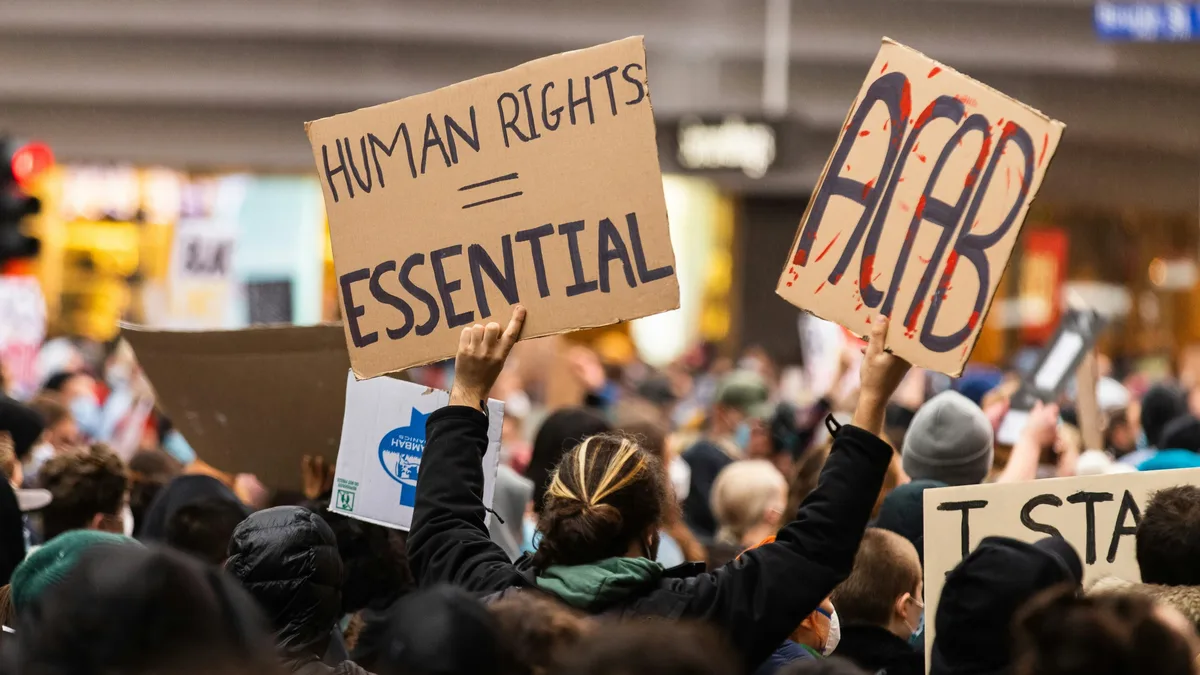
Amnesty International Condemns Arbitrary Detentions
Amnesty International has denounced the arbitrary detention of former Prime Minister Imran Khan's family members and political party activists ahead...

Australia's 25-Year Offshore Detention System Caused Grave
Human Rights Watch reports Australia's 25-year offshore detention policy has forcibly transferred over 5,000 asylum seekers, causing severe harm and

German journalist details Syria detention
Eva Maria Michelmann, a German journalist detained in Syria for five months, describes being held without legal access and witnessing signs of...

Tunisia arrests journalist Mohamed Yousfi in financial probe
Tunisian authorities arrested journalist Mohamed Yousfi on September 4, 2026, holding him in pretrial detention on financial crime allegations.