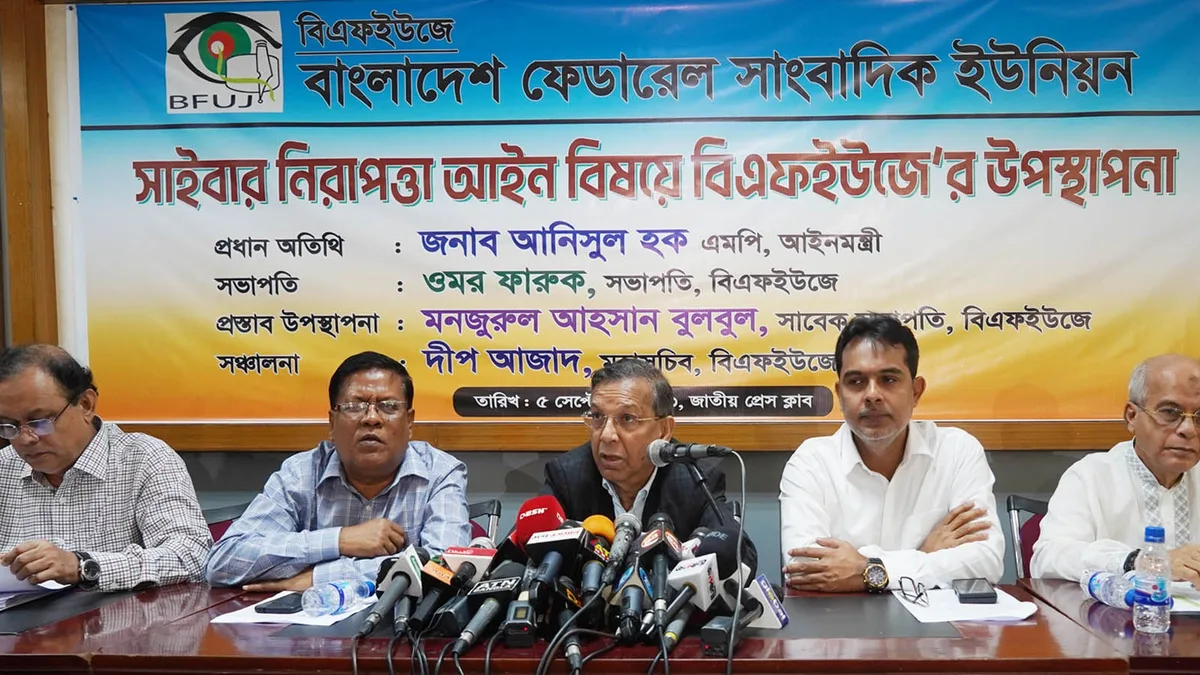
Bangladesh Cyber Security Act
| Full title | Digital Security Act, 2018 |
|---|---|
| Country of origin | Bangladesh |
| First created | 2018 |
| Original use | To prevent cybercrimes and ensure digital security. |
| Scope | Criminalizes a range of digital and online activities. |
| Key provisions | Include penalties for defamation, spreading propaganda, and unauthorized data access. |
| Enforcement agency | Bangladesh Police |
| Maximum penalty | Life imprisonment |
Origin and history
The Bangladesh Cyber Security Act originates from the People's Republic of Bangladesh. It was enacted in the 2020s, replacing the earlier Digital Security Act of 2018. The law's development followed years of increasing digitalization and online communication within the country. Its legislative history is marked by public and international debate concerning its provisions and their application. The act is part of a broader global trend where nations are establishing legal frameworks to address cybercrime and digital content. Its creation was officially motivated by the need to address evolving cyber threats and secure digital infrastructure.
What it is for
The primary stated purpose of the Bangladesh Cyber Security Act is to prevent cybercrimes and ensure the security of digital systems and data. It aims to criminalize activities such as hacking, unauthorized data access, and the spread of malicious software. The law also seeks to address the publication or transmission of illegal content online, which includes defamatory or fraudulent material. It provides a legal basis for investigating and prosecuting offenses committed in digital spaces. Furthermore, the act grants law enforcement agencies specific powers to collect digital evidence and take action against suspected violations. Its framework is intended to protect critical information infrastructure and foster a safer online environment for users.
Pros and cons
A significant pro of the act is that it provides a structured legal mechanism to combat genuine cyber threats like hacking, data theft, and online fraud. It theoretically offers victims of cybercrime a path to legal recourse and justice. The law also modernizes the legal framework to keep pace with technological advancements. A major con is that its broad and vaguely defined provisions, particularly concerning digital speech, are frequently criticized for potentially suppressing freedom of expression and investigative journalism. Critics, including human rights organizations, argue it can be and has been used to harass, detain, and silence dissenters, activists, and opposition voices under the guise of maintaining digital security. A common mistake is for individuals to assume online commentary is protected, not realizing their posts could be interpreted as violating the act's expansive terms, leading to severe legal consequences including lengthy pre-trial detention.
Who it suits
This law primarily suits state authorities seeking legal tools to prosecute malicious cyber activities and secure national digital assets. It is designed for law enforcement agencies requiring statutory powers to investigate digital crimes and gather electronic evidence. The framework may also suit victims of unambiguous cybercrimes like financial fraud or systemic hacking who need a legal avenue for complaint. It does not suit journalists, academics, activists, or ordinary citizens engaging in robust political discourse or criticism, as they face high risks of being targeted under its provisions. The act is suited to a governance model that prioritizes state control over digital information and public discourse. It is generally unsuited to an open digital ecosystem where freedom of expression is a paramount constitutional and operational principle.
Latest Bangladesh Cyber Security Act news
Latest reporting

Bangladeshi migrants trafficked into cyber
A report details how Bangladeshi migrants are lured to Cambodia via social media job ads, trafficked into scam compounds, and forced to commit online

Serbia orders expulsion of rights advocate Massimo Moratti
Serbian authorities have ordered the expulsion of human rights and media freedom advocate Massimo Moratti, citing unspecified security risks.

Hong Kong Activists Jailed Under National Security Law
Amnesty International condemns the sentencing of Tiananmen vigil organizers in Hong Kong, calling it a 'triple tragedy' and a violation of...

Gang Violence Targets Haiti's Football Infrastructure
Criminal gangs in Haiti have attacked and looted key sports facilities, including the national stadium and a FIFA training center, amid a wider...

Saudi retiree threatened for online plea to Crown Prince
A retired Saudi soldier was summoned, fingerprinted, and threatened by state security after posting a video requesting financial help, highlighting a

Hong Kong Convictions Underline Campaign to Erase Chinese History
Amnesty International condemns convictions of Tiananmen vigil organizers under Hong Kong's National Security Law