Commissions Of Inquiry And Fact Finding Missions
| Right name | The right to truth |
|---|---|
| Violation documented | Serious violations of international human rights law and international humanitarian law |
| Mechanism that could remedy it | Commissions of inquiry and fact-finding missions |
| First documented | 20th century |
| Original use | To establish facts and responsibilities regarding serious violations |
| Typical mandate | To investigate, establish facts, and make recommendations |
| Common outcome | A public report |
Origin and history
Commissions of inquiry and fact-finding missions are investigative mechanisms with origins in early 20th-century international law and state practice. Their modern form is heavily influenced by the practices of the United Nations and regional intergovernmental bodies following the Second World War. The concept of an impartial, external body established to document facts in situations of dispute or atrocity gained significant traction in the late 20th century. This period saw the increasing use of such mechanisms to address violations that crossed international borders or involved non-state actors. Historical precursors can be traced to earlier interstate arbitration and national royal commissions, particularly within the British Commonwealth tradition. The formal institutionalization of these tools by the UN Human Rights Council and the UN Secretary-General marks a key development in their standardized application.
What it is for
These mechanisms are established primarily to independently investigate and document allegations of serious violations of international human rights law or international humanitarian law. Their core function is to establish a reliable, evidence-based factual record of events where such violations are alleged to have occurred. They serve to clarify the circumstances, identify patterns of abuse, and determine responsibilities, including potential state or individual accountability. The findings are intended to inform and guide subsequent national or international accountability processes, such as judicial proceedings or sanctions regimes. They also aim to provide a measure of acknowledgment and voice to victims by officially recognizing the events documented. Furthermore, their reports often contain concrete recommendations for redress, reforms, and measures to prevent recurrence.
Overview
A commission of inquiry or fact-finding mission is an ad hoc, temporary body mandated by an international or regional authority, such as the UN Human Rights Council or the UN Security Council. It typically operates with a specific, time-bound mandate outlining the situation, geographic scope, and violations it is to investigate. The body is composed of independent experts, often with legal, military, or forensic backgrounds, who are appointed for their impartiality and expertise. Its work involves gathering evidence from a wide range of sources, including witness testimony, satellite imagery, medical reports, and official documents, while adhering to strict standards of verification. The final output is a detailed written report presented to the mandating body, which summarizes findings of fact, analyzes legal responsibility, and proposes recommendations. While its findings are not legally binding in themselves, they carry significant political and moral weight and can be pivotal in shaping international response.
What to know
The establishment of such a body is a political decision by the mandating institution, often reflecting international concern but also geopolitical tensions, which can influence the scope and resources provided. These mechanisms lack coercive powers; they cannot compel states to cooperate, arrest individuals, or directly enforce their recommendations, relying instead on persuasion and the authority of their mandate. Their effectiveness is heavily dependent on the cooperation of relevant states, which may deny access to territory, witnesses, or evidence, severely hampering the investigation. The security risks for investigators, and particularly for witnesses who provide testimony, are extremely high and require robust protective measures. The methodology must be rigorous to withstand scrutiny, as findings are frequently challenged by implicated parties seeking to discredit the process. The ultimate impact depends largely on whether the mandating body and influential states act upon the recommendations, as the mechanism itself dissolves after reporting.
Common questions
A common question is whether these commissions have the power to issue indictments or make arrests, which they do not, as their role is investigatory rather than prosecutorial. People often ask how witnesses are protected, which involves confidential testimony, secure data storage, and sometimes relocation programs, though protection is never absolute in conflict zones. Many inquire about the difference between a UN commission of inquiry and the International Criminal Court; the former investigates broadly to establish facts and patterns for a political body, while the latter is a permanent court focusing on individual criminal prosecution. Questions arise about what happens if a state refuses to cooperate, which typically leads the commission to base its work on external sources, often resulting in findings that the state contests as one-sided. Individuals often wonder if they can submit evidence, which is usually possible through formal calls for submissions, though all evidence undergoes a stringent verification process. A frequent query is about the legal status of the final report, which is an authoritative document of the mandating international organization but does not itself constitute a judicial verdict.
Pros and cons
A significant pro is the ability to create an impartial, internationally recognized record of events in highly politicized environments, which can counter denialism and serve as a historical baseline. They can shine a sustained spotlight on situations that might otherwise be ignored, applying moral and political pressure on perpetrators and enabling more informed policy responses. However, a major con is the frequent lack of follow-through; meticulously documented reports can be shelved with no meaningful action taken, leading to victim disillusionment and a sense of impunity. The process can be extremely resource-intensive, diverting funds and attention, yet yield little tangible outcome if key states block subsequent measures. A common mistake is overestimating their direct impact; they are diagnostic tools, not remedies, and their establishment can sometimes be used as a symbolic substitute for more decisive intervention. Parties who seek immediate justice or legal enforcement often regret supporting such mechanisms if they are not part of a broader, sustained accountability strategy.
Who it suits
This mechanism suits international bodies or states seeking to formally and authoritatively document a pattern of violations as a foundational step for longer-term policy, whether that involves sanctions, referrals to courts, or reforms. It suits situations where a clear, consolidated factual account is needed to cut through conflicting narratives and inform diplomatic negotiations or peace processes. It is appropriate for complex, large-scale violations where patterns and state responsibility need to be mapped, rather than for investigating isolated individual crimes. This tool suits scenarios where the primary immediate goal is the creation of a public record for historical memory and victim recognition, even when immediate judicial action is not politically feasible. It is less suited to contexts requiring urgent physical protection for victims or swift punitive action, as the process is deliberative and its outputs are not self-executing. Ultimately, it is a tool for those prepared to engage in a potentially lengthy process of building a case for action, rather than for those expecting an immediate, decisive result.
Latest Commissions Of Inquiry And Fact Finding Missions news
Latest reporting
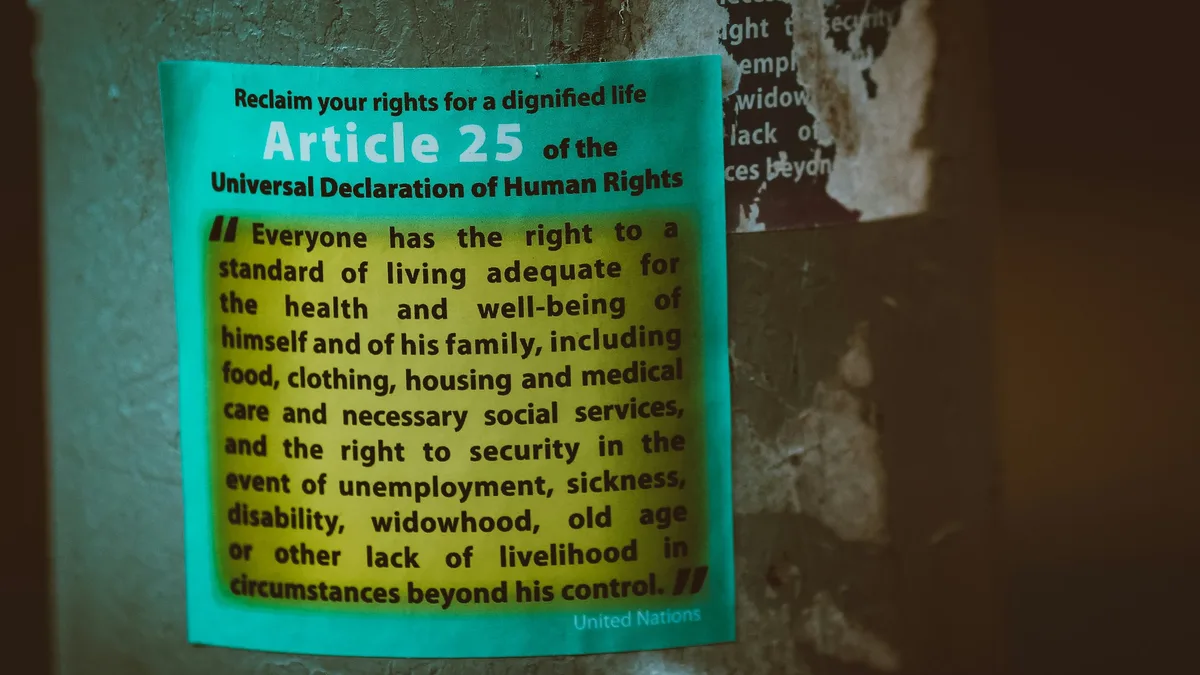
Venezuela Civil Society Demands UN Fact-Finding Mission
Twenty-one civil society organizations, including Amnesty International, have called for the UN Human Rights Council to renew the Venezuela...
Pakistan Hospital Fire Kills 14 Newborns
A fire at a major Islamabad hospital killed 14 newborns, with a preliminary inquiry finding a lack of fire alarms and sprinklers.