Freedom Of Assembly And Association
| Country of origin | Enlightenment-era Europe |
|---|---|
| First created | Late 18th century |
| Original use | To protect collective action for political and social change |
| Legal basis | Constitutional or international human rights law |
| Typical limitations | Public order, safety, national security |
| Common forms | Political parties, trade unions, non-governmental organizations |
| Scope | Generally includes both assembly (gathering) and association (forming groups) |
Origin and history
The concept of Freedom Of Assembly And Association finds its most direct and influential legal codification in the political revolutions of the late 18th century in Europe and North America. Its philosophical underpinnings are rooted in earlier Enlightenment thought, which emphasized natural rights and the social contract. The right was explicitly enshrined in the First Amendment to the United States Constitution in 1791, which prohibits Congress from making laws abridging "the right of the people peaceably to assemble". Parallel developments occurred in France following the 1789 Revolution, with the Declaration of the Rights of Man and of the Citizen affirming the right of citizens to congregate. Throughout the 19th and 20th centuries, the right became a cornerstone of labor movements, political dissent, and civil society formation globally. Its international legal status was solidified in the mid-20th century through instruments like the 1948 Universal Declaration of Human Rights and the 1966 International Covenant on Civil and Political Rights.
What it is for
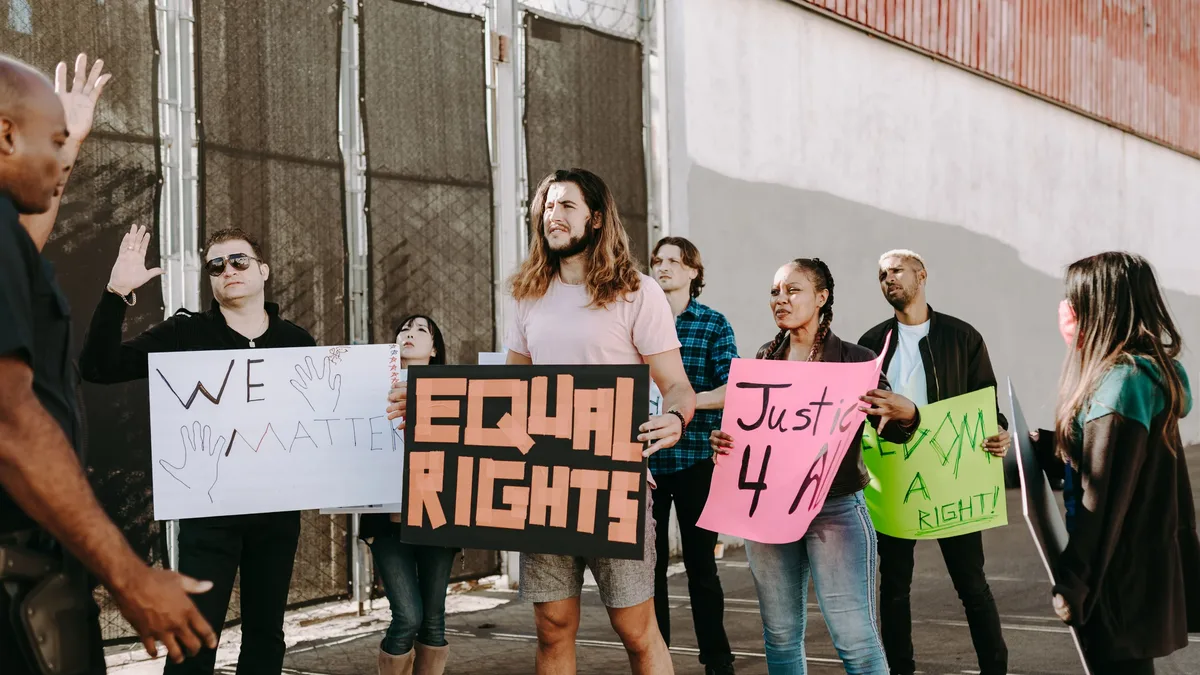
This fundamental right exists to enable collective action, which is essential for the functioning of a democratic society and the protection of other rights. It allows individuals to gather physically in public or private spaces for peaceful purposes, such as protests, rallies, or meetings, to express shared ideas or grievances. Simultaneously, it protects the right to form and join lasting groups, such as trade unions, political parties, civil society organizations, and professional associations. The mechanism serves as a critical counterbalance to state and corporate power by allowing citizens to organize, pool resources, and amplify their voices. It facilitates the formation of communities of interest and identity, which are vital for social cohesion and cultural expression. Ultimately, it is a prerequisite for political participation, social progress, and holding power-holders accountable through organized means.
Overview
Freedom of assembly refers specifically to the temporary gathering of people for a common purpose, typically in a public space, while freedom of association pertains to the more sustained coming together in organizations or groups. These rights are universally recognized as interdependent, as effective association often requires the capacity to assemble, and assemblies are frequently organized by associations. Legally, they are classified as negative rights, meaning the state's primary obligation is to refrain from unjustified interference, though they also impose positive duties to protect assemblies from disruption and facilitate their exercise. The rights are not absolute and may be subject to restrictions prescribed by law that are necessary in a democratic society for purposes like national security, public safety, or the protection of the rights of others. Violations can range from outright bans and disproportionate force to burdensome registration requirements, surveillance, and harassment of organizers. The remedy for violations typically involves legal challenges to secure recognition, protection, and sometimes compensation, alongside advocacy for legislative and policy reform.
What to know
A key distinction is that these rights protect peaceful assembly and association; they do not protect gatherings that incite imminent violence or involve membership in criminal organizations. States often impose notification or permit requirements for assemblies, but these must not be used as de facto prohibitions or be administered in a discriminatory manner. The right to association includes the right not to be compelled to join an association, a principle crucial in contexts like closed-shop union agreements. Legal standing to challenge violations typically rests with the organizers of an assembly or the members of an association, and cases are often brought before constitutional courts or international human rights bodies. Documentation of violations is critical and includes gathering evidence of restrictive laws, denial of permits, surveillance, intimidation of participants, and violent dispersal. Effective remedies often require a combination of strategic litigation, public advocacy, coalition-building with other groups, and engagement with international human rights mechanisms to apply external pressure.
Common questions
A common question is whether counter-protesters have the same rights, and the principle is that all peaceful assemblies are protected, though authorities must manage competing gatherings to prevent violence. People often ask if online gatherings constitute assembly, and while digital organizing is protected under freedom of association, the legal extension of "assembly" to purely virtual spaces remains an evolving area of law. Another frequent inquiry concerns workplace associations, where the right specifically includes forming and joining trade unions for collective bargaining, protected under separate international labor standards. Many wonder about the limits on private property, and the right generally applies to public forums, though associations can meet on private property with the owner's consent, and states may have obligations to ensure access for assemblies in certain quasi-public spaces. A recurring question is what "peaceful" means, and it is widely interpreted to include assemblies that are disruptive or cause inconvenience, as long as they do not involve violence or credible threats thereof. Finally, individuals often ask about legal recourse, which depends on domestic legal frameworks but can ultimately include petitions to regional human rights courts or UN treaty bodies after exhausting local remedies.
Pros and cons
The primary advantage of this mechanism is its foundational role in democracy, enabling marginalized groups to challenge injustice and innovate socially without requiring state approval for every collective action. It fosters a vibrant civil society that can provide services, advocate for change, and act as a school for civic engagement. A significant con, however, is its inherent tension with public order, where governments frequently invoke security concerns to preemptively ban assemblies or dismantle associations, often based on vague or overly broad laws. Another practical drawback is the resource disparity in its exercise, where well-funded groups can organize more effectively and secure permits, while grassroots movements may be stifled by logistical and legal hurdles. A common mistake by organizers is failing to understand specific local permit laws or not documenting government communications, which can lead to avoidable legal penalties or unsafe situations. Many who rely solely on this mechanism in highly repressive contexts regret not coupling it with stronger international advocacy or digital security measures, as domestic legal avenues may be entirely ineffective or retaliatory.
Who it suits
This mechanism suits organized civil society groups, including NGOs, trade unions, and activist networks, which require legal protection to operate and mobilize their members. It is essential for political movements and opposition groups that seek to challenge existing policies or power structures through collective public expression and sustained organization. Journalists and human rights defenders frequently invoke these rights to conduct investigations, report on issues, and collaborate for their own protection and advocacy. It also suits professional and cultural associations that aim to set standards, share knowledge, and preserve identity without state interference. Communities facing discrimination or seeking to advance social rights, such as LGBTQ+ groups or ethnic minorities, rely on this mechanism to build solidarity and campaign for equality. Ultimately, it is a cornerstone for any individual or group in a society that aspires to democratic governance, as it provides the structural means for collective voice and action beyond the ballot box.
Latest Freedom Of Assembly And Association news
Latest reporting

Malaysia FOI Bill rated among world's worst
A global assessment scores Malaysia's proposed Freedom of Information Bill 2026 just 47 out of 150 points, ranking it 137th worldwide.

Egypt’s prior licensing system for digital
A report by the Association for Freedom of Thought and Expression (AFTE) finds Egypt’s prior licensing system under Law No.

Mali: Four Human Rights Defenders and Journalists Sentenced Amid Shrinking Civic Space
On August 17, 2026, Mali's Court of Appeal sentenced Mohamed Youssouf Bathily and Sidibé Rokia Doumbia to ten years in prison for association of...

Argentina's Surveillance State Expands Under Javier Milei's Administration
Amnesty International reports that Argentina's government has expanded its surveillance capabilities, creating a chilling effect on rights to privacy...