Hong Kong
| Right | Freedom of assembly |
|---|---|
| Violation | Unauthorised assembly |
| Mechanism | Judicial review |
| Country of origin | United Kingdom |
| First created | 1846 |
| Original use | To peacefully gather and demonstrate |
| Scope | Peaceful gatherings for lawful purposes |
| Typical remedy sought | Overturning of a ban or conviction |
Origin and history
Hong Kong's origins lie as a collection of fishing villages and a minor trading post on the southern coast of China. Its modern history is fundamentally shaped by its status as a British colony, established after the Qing dynasty ceded Hong Kong Island to Britain in 1842 following the First Opium War. The colony expanded in 1860 with the addition of the Kowloon Peninsula and again in 1898 with the 99-year lease of the New Territories. This colonial administration persisted for over 150 years, creating a distinct legal, administrative, and linguistic environment separate from mainland China. The late 20th century saw negotiations between the United Kingdom and the People's Republic of China, culminating in the 1984 Sino-British Joint Declaration. This agreement set the terms for the handover of sovereignty, which occurred on 1 July 1997, establishing Hong Kong as a Special Administrative Region of China under a "one country, two systems" framework.
What it is for
The "one country, two systems" principle was designed to preserve Hong Kong's established economic and legal systems for a period of 50 years after the handover. Its primary function is to maintain Hong Kong's status as a global financial centre, a hub for international trade, and a conduit for foreign investment into mainland China. The system is intended to guarantee rights and freedoms not generally available in mainland China, including freedom of assembly, freedom of the press, and an independent judiciary. It serves to allow Hong Kong a high degree of autonomy in all areas except foreign affairs and defence, which are administered by the central government in Beijing. The Basic Law, Hong Kong's constitutional document, codifies these arrangements and outlines the region's governance structure. The system is fundamentally meant to balance Hong Kong's unique international character with its reintegration into Chinese sovereignty.
Overview
Hong Kong is a Special Administrative Region of the People's Republic of China, operating with a separate legal system based on English common law and its own currency, the Hong Kong dollar. Its governance is executed by a Chief Executive, who is selected by a committee and appointed by the central government, alongside a partially elected Legislative Council. The region's economy is characterized by low taxation, free trade, and minimal government intervention, ranking it as one of the world's most competitive financial markets. Key industries include financial services, logistics, and professional services, with a dense, urban population concentrated in a relatively small geographic area. The social fabric is predominantly Cantonese Chinese but with significant international influences due to its colonial history and global economic role. The tension between its guaranteed autonomy and the ultimate sovereignty of Beijing defines its contemporary political and legal landscape.
What to know
The central document governing Hong Kong is the Basic Law, which serves as its mini-constitution under Chinese sovereignty. Article 23 of the Basic Law requires Hong Kong to enact laws on its own to prohibit acts of treason, secession, sedition, and subversion against the central government, a long-standing and contentious legislative issue. The National Security Law imposed directly by Beijing in 2020 criminalizes secession, subversion, terrorism, and collusion with foreign forces, fundamentally altering the legal environment. This law allows for certain cases to be handled by mainland Chinese authorities and has been followed by the arrest of numerous pro-democracy activists and the dissolution of prominent civil society groups. The electoral system was overhauled in 2021 to ensure only "patriots" administer Hong Kong, drastically reducing the number of directly elected seats and vetting all candidates for loyalty. Understanding Hong Kong requires recognizing that its promised high degree of autonomy is ultimately subject to the interpretation and will of the central authorities in Beijing.
Common questions
A common question is whether Hong Kong is part of China, to which the unequivocal answer under international law and the terms of the handover is yes, it is a Special Administrative Region of the PRC. People often ask about the status of the "one country, two systems" framework, which remains the official policy but whose implementation has seen increasing integration of mainland legal and political norms. Many inquire about travel, noting that visitors from most countries do not require a visa for short stays, though entry requirements differ from those for mainland China. Questions arise about language, with Cantonese and English being official, though Mandarin use is rising, and all public signage is typically trilingual. Individuals frequently question the state of protests and freedoms, which have been severely curtailed since the 2019 unrest and the subsequent National Security Law. Another frequent query concerns Hong Kong's economic role, which continues as a major financial gateway but faces increasing competition from mainland cities like Shanghai and Shenzhen.
Pros and cons
A significant pro is Hong Kong's robust and internationally trusted common law system, which has historically provided strong protections for contract and property rights, underpinning its financial success. Its simple tax system with low rates and no capital gains tax remains a powerful draw for international businesses and talent. A major con is the severe erosion of political freedoms and judicial independence since 2020, creating a climate of legal uncertainty and self-censorship that undermines its international appeal. The high cost of living, particularly extreme property prices, creates severe social inequality and makes it difficult for all but the highest earners to establish a comfortable life. The common mistake is for individuals or firms to assume the pre-2020 legal and political environment is static, leading to miscalculations when the rules of governance can change swiftly based on Beijing's priorities.
Who it suits
Hong Kong suits multinational corporations and financial institutions that require a base in Asia with familiar legal structures, free capital flow, and connectivity to both Chinese and international markets. It suits high-earning professionals in sectors like finance, law, and logistics who can command salaries that offset the high cost of living and value the city's efficiency and cosmopolitan amenities. The environment suits those who prioritize economic opportunity and career advancement over political participation or activism, given the current constraints on dissent. It is less suited to individuals or organizations whose operations rely on or advocate for political liberties, a free press, or robust civil society, as these face significant legal and operational risks. The city can be challenging for families seeking spacious living conditions or individuals sensitive to air pollution and densely packed urban environments. It remains a viable hub for those accepting the primacy of stability and national security as defined by Beijing, within a still-distinct economic system.
Latest Hong Kong news
Latest reporting

Joshua Wong sentenced to 10 years under Hong Kong security law
Democracy activist Joshua Wong, 30, received a 10-year prison sentence for 'foreign collusion' under Hong Kong's National Security Law, extending his...

Hong Kong Police Launch AI National Security Platform in Primary School
Hong Kong police launched an AI-powered national security education platform for primary school pupils on October 6, 2026.

Hong Kong Activists Jailed Under National Security Law
Amnesty International condemns the sentencing of Tiananmen vigil organizers in Hong Kong.

Hong Kong Court Upholds Conviction of 612 Fund Trustees
The Hong Kong Court of Appeal affirmed the conviction of five trustees of the 612 Humanitarian Fund for failing to register under the Societies...
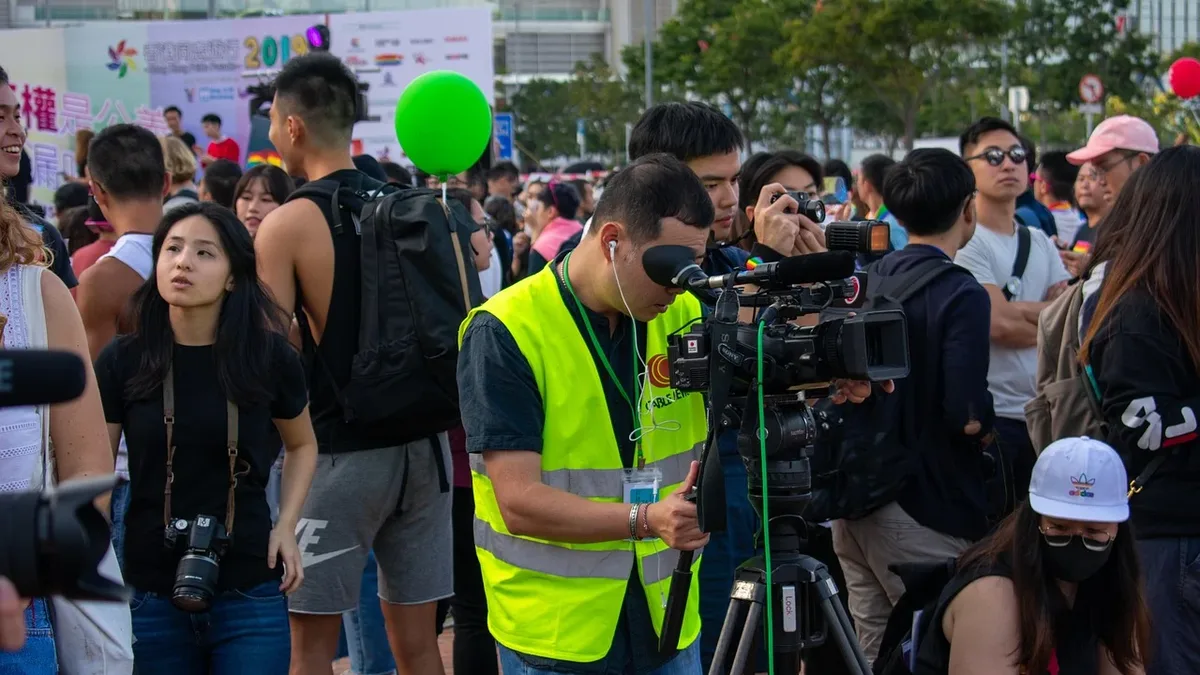
Hong Kong Convictions Underline Campaign to Erase Chinese History
Amnesty International condemns convictions of Tiananmen vigil organizers under Hong Kong's National Security Law.