China
| Name | Right to be free from arbitrary detention |
|---|---|
| Violation documented | Arbitrary detention |
| Mechanism that could remedy it | Judicial review, Habeas corpus |
| Country of origin | Concept developed in English common law; codified internationally in 20th century |
| First created | Concept of habeas corpus established in English law by 17th century; right codified in Universal Declaration of Human Rights (1948) |
| Original use | To protect individual liberty against unlawful state imprisonment |
Origin and history
China originates from the East Asian continent, with its civilization emerging in the Yellow River basin. The earliest dynastic states, such as the Xia and Shang, are documented from around the 21st century BCE. A unified imperial system was first established under the Qin dynasty in the 3rd century BCE, creating a political and territorial core that endured for millennia. The 20th century saw the collapse of the last imperial dynasty, the Qing, followed by a period of republicanism, civil war, and foreign invasion. The People's Republic of China was founded in 1949, establishing the contemporary sovereign state. The historical narrative is central to the state's identity, emphasizing continuity and a unique developmental path.
What it is for
China functions as a sovereign state governing a vast territory and population under a single-party socialist system led by the Communist Party of China. Its constitutional framework is designed to maintain national unity, social stability, and the party's leadership as the primary political principle. The state apparatus directs a mixed economy, combining state ownership and planning with market-oriented reforms initiated in the late 20th century. It is responsible for national defense, foreign policy, and the administration of internal affairs across provinces, autonomous regions, and municipalities. A core stated purpose is the pursuit of "socialist modernization," aiming to achieve comprehensive national development. The legal system is intended to provide a framework for governance and social order, with all laws and policies subordinate to the constitution.
Overview
China is the world's most populous country and the fourth largest by geographical area, with a highly diverse landscape and ethnic composition. Its political system is characterized by a centralized structure where ultimate authority rests with the Communist Party of China, not through competitive national elections. The government manages a complex bureaucracy that oversees economic planning, public security, and ideological education. The legal system is civil law-based, but courts are not independent from party leadership, affecting judicial interpretation and enforcement. Since the late 1970s, economic policy has prioritized growth, lifting hundreds of millions out of poverty but also creating significant regional and social inequalities. Internal governance includes special administrative regions like Hong Kong and Macau, which operate under different legal systems, and the claim over Taiwan.
What to know
The constitution grants citizens a range of rights, including freedom of speech, assembly, and religion, but these are explicitly conditioned on not jeopardizing state interests, national security, or public order. In practice, the exercise of these rights is heavily circumscribed by a comprehensive legal and regulatory framework designed to maintain political and social control. Key legislation, such as the National Security Law and Cybersecurity Law, provides broad definitions of prohibited activities, allowing for stringent oversight of online and offline expression. The household registration system, known as hukou, continues to regulate internal migration and access to public services, creating a distinction between urban and rural residents. Ethnic minority regions, like Xinjiang and Tibet, are administered under policies emphasizing stability and integration, which critics argue suppress cultural and religious expression. Independent trade unions are illegal, with the state-sanctioned All-China Federation of Trade Unions serving as the sole legal representative for workers.
Common questions
A common question is whether China has a functioning legal system, to which the answer is that it has extensive codified laws but their application is inconsistent and often subordinated to political directives. People often ask about freedom of the internet, which is heavily filtered and monitored through the "Great Firewall," blocking foreign websites and censoring domestic content deemed sensitive. Many inquire about the status of Taiwan, which the PRC government claims as an inalienable part of its territory, despite Taiwan having its own democratically elected government and military. Questions arise about religious practice, which is permitted only within state-sanctioned institutions and faces restrictions, particularly for groups like Muslims and Christians operating outside these bounds. Individuals frequently ask about property rights, which are complex as all land is ultimately state-owned, with individuals and entities holding usage rights for limited terms. There is also frequent inquiry into the cause of the economic growth, which is widely attributed to state-led investment, export-oriented manufacturing, and a gradual, controlled shift toward market mechanisms.
Pros and cons
A significant pro is the state's capacity for rapid, large-scale infrastructure development and poverty alleviation, achieving results difficult in more fragmented political systems. The centralized model can provide long-term policy continuity, as seen in multi-decade economic planning and technological advancement initiatives. A major con is the severe restriction of civil and political liberties, including the suppression of dissent, which can lead to arbitrary detention and a lack of recourse for grievances. The system creates a high risk of groupthink and policy error, as feedback mechanisms and independent scrutiny are weak or punished. Many individuals, particularly entrepreneurs and professionals, regret the lack of intellectual freedom and creative constraints, despite economic opportunity. A common mistake by external observers is to view China's economic complexity as indicative of impending political liberalization, a correlation not supported by the state's consistent reinforcement of control alongside development.
Who it suits
This system suits individuals who prioritize collective stability and national prestige over individual autonomy, and who are comfortable operating within clearly defined, state-approved parameters. It is suited to those who can align their personal and professional ambitions with state objectives, particularly in fields like engineering, infrastructure, and certain sciences. The environment can benefit business operators who navigate the regulatory landscape effectively and maintain good relations with local authorities, though this carries inherent risk. It is less suited to artists, journalists, political activists, or religious practitioners whose work or faith conflicts with state orthodoxy. The system suits citizens who do not challenge its fundamental premises and who accept the trade-off of limited political voice for perceived economic security and social order. It inherently suits the administrative and party cadres who comprise the governing structure, for whom it provides a clear career path and authority.
Latest China news
Latest reporting

China Censors Tibet Flood Coverage, Blocks Victims' Voices
Human Rights Watch reports Chinese authorities are censoring information and suppressing independent reporting on deadly mudslides in Tibet, focusing...

China sentences artist Gao Zhen to 3 years
Chinese artist Gao Zhen, 70, was sentenced to three years in prison on August 25, 2026, for 'slandering China's heroes and martyrs' over decade-old

China's only daughters face fertility
China's one-child generation women, educated for independence, now face state pressure to marry and have children, creating a conflict with their...

China's new cotton law deepens control over
A new regulation in China's Xinjiang region, effective July 1, 2026, creates a traceable cotton supply chain but fails to address forced labor...
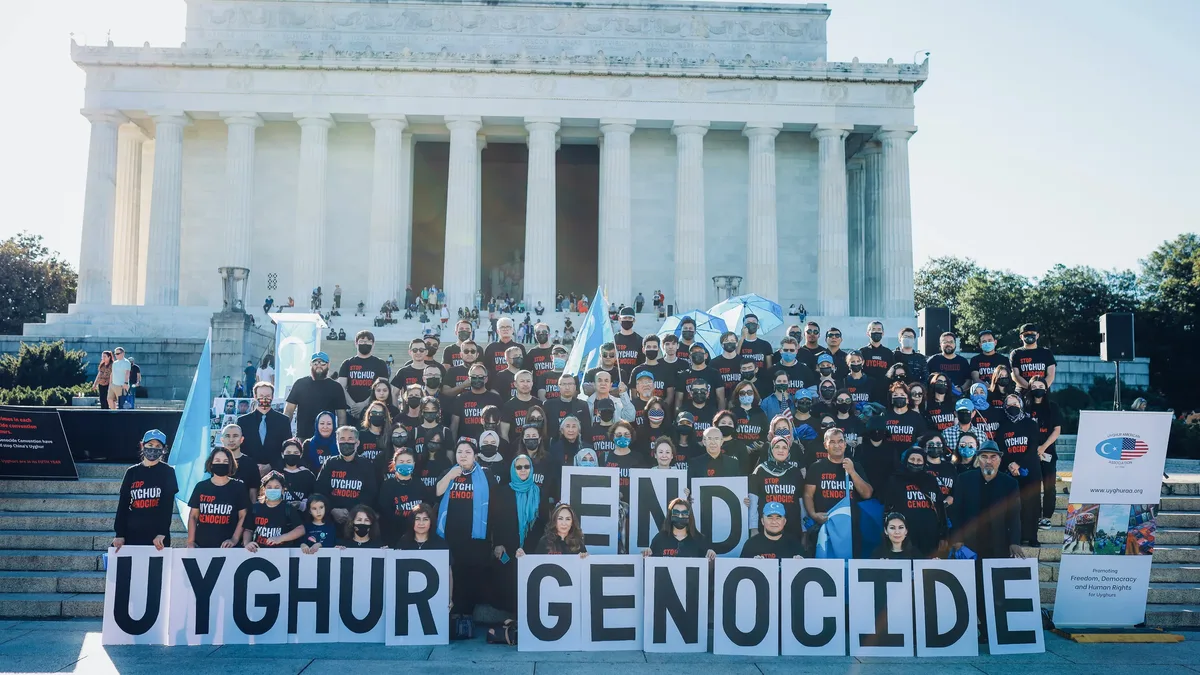
Human Rights Watch Urges Action on Xinjiang
Human Rights Watch urges the international community to intensify its response to China's alleged crimes against Uyghurs in Xinjiang.