Georgia uses Russian facial recognition
Georgia's government uses Russian facial recognition technology to identify and fine protesters, chilling dissent and violating international civil rights.
The Georgian government has used a Russian facial recognition system to identify and fine protesters, effectively suppressing the right to assembly. The system, procured from a Moscow-based company, has led to frozen bank accounts and a widespread chilling effect on demonstrations.
Nino, a Georgian woman in her 40s, was summoned to court in mid-March 2025 for blocking a road in Tbilisi two and a half months earlier. She was shown footage of herself at a protest, identified by facial recognition software, and fined GEL 5,000. Five months later, her bank accounts were frozen, forcing her to crowdfund to pay the penalty. Like many others, she has largely stopped protesting to avoid further fines.
Erosion of assembly rights
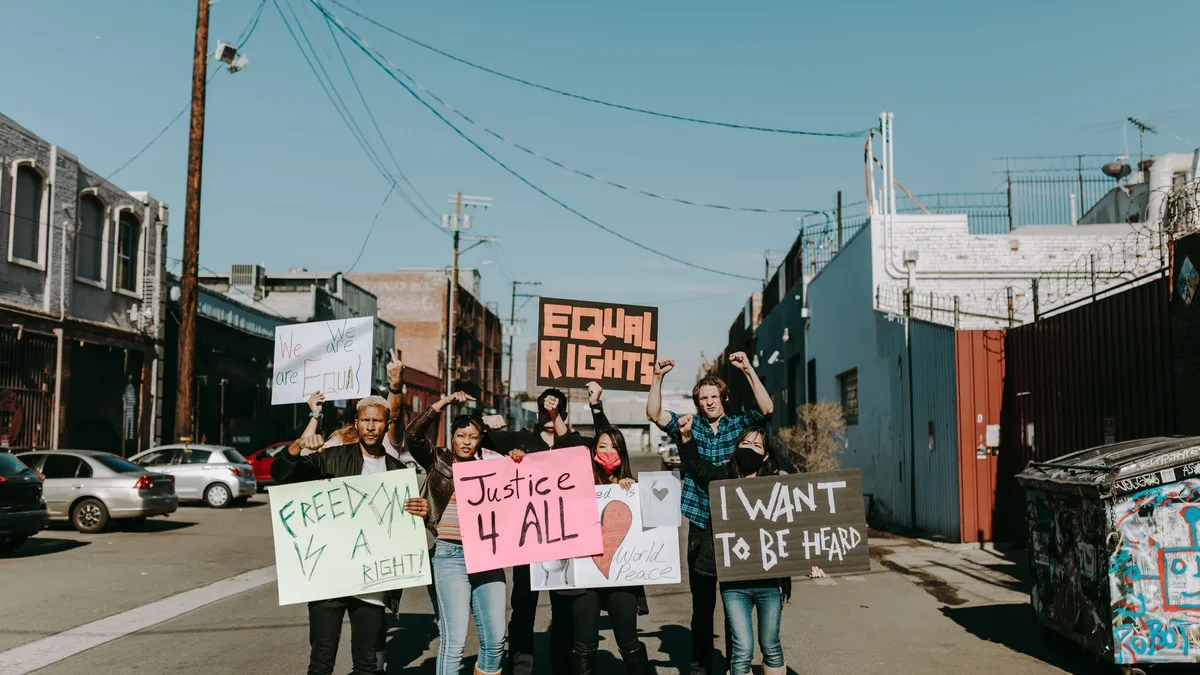
Protesters have been progressively stripped of their rights since Georgia gained EU candidate status in 2023. Following allegedly rigged parliamentary elections in October 2024, Georgians protested for 580 consecutive days. In response, Prime Minister Irakli Kobakhidze announced a suspension of the EU accession process until 2028, a move considered unconstitutional. Legal penalties for protest-related actions escalated sharply.
| Year | Assembly Requirement | Penalty for Blocking a Road | Key Legal Change |
|---|---|---|---|
| 2023 | No permit required | GEL 500 (approx. EUR 165) | Freedom of assembly guaranteed. |
| 2024 | N/A | GEL 5,000 (approx. EUR 1,654) | Covering one's face became an administrative offense. |
| 2025 | State registration required | Criminal offense | Both blocking a road and gathering became criminal acts. |
| 2026 | N/A | N/A | Calling the government illegitimate online became a criminal act. |
Transparency International concluded that the amended laws have effectively abolished the constitutional freedom of assembly.
The technological backbone
The government's crackdown gained force with the deployment of the Polyface facial recognition system. By March 2025, at least GEL 2 million in fines had been imposed. The system is procured from Papillon AO, a Moscow-based company sanctioned by several countries. Its products are used by Russian law enforcement and autocracies close to Russia.
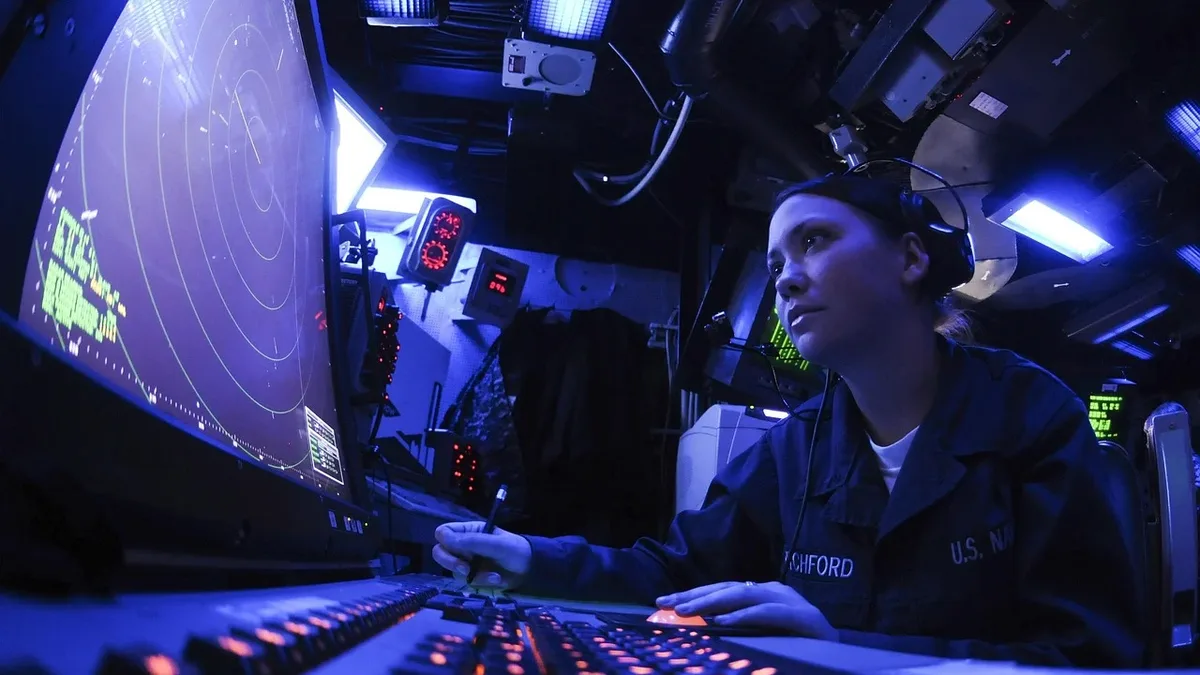
According to a 2018 contract, Georgian ministry operators were to be trained by Russian personnel. Papillon AO is obliged by Russian law to cooperate with Russian security services if compelled. The software's latest upgrade, Polyface 3.7.0, was delivered in June 2025. Built on a Russian AI algorithm, it records high-definition images of crowds, even in poor lighting, and can identify faces under masks.
System capabilities and use
The system matches faces to identities using Georgia's Unified Information Bank, which contains civil registry photos. It can also search against images from social media. The investigation identified three primary uses for the software.
Automated identification scans live camera feeds, selecting and capturing images of searchable faces in a crowd continuously without human intervention. Operator-directed search allows a staff member to manually control a camera, zoom in on a person, and run a real-time search. Watchlist alerts flag individuals from a pre-loaded list of people of interest when spotted by a camera.
One protester, Elene, recounted how a friend, Levani, was captured in detail. She said he was barely at the edge of the frame, but the camera was zoomed in to the point where every expression, every smile, was visible.
Chilling effect and uncertainty
The delayed arrival of fines, sometimes weeks or months after a protest, created profound uncertainty. Attending a protest became a searchable data record. Georgian cybersecurity expert Giorgi Lubaretsi explained the system's reach. He said the software doesn't only identify who someone is - it can reconstruct a full protest history. Once identified at one protest, the system can locate them across every other recorded event.
Initially, solidarity funds helped protesters pay fines. Elene noted that at first, being fined felt almost like a badge - people would fundraise for you, there was solidarity. Then the government seized those funds' accounts. Demonstrators described stopping chanting, using whistles, or carrying posters to avoid detection.
The Public Defender's Office recorded 282 cases of physical abuse by police in late 2024, with at least 486 people detained in November and December alone. Despite this, protests spread to 37 of Georgia's 55 cities. The surveillance system, however, helped achieve what physical force alone could not: breaking the protest movement.
This article was originally published on Algorithm Watch on June 27, 2026. This edited version is republished on Global Voices under a Creative Commons Attribution 4.0 International license (CC BY 4.0).