
National Human Rights Institutions
| Country of origin | Varies by jurisdiction |
|---|---|
| First created | 20th century |
| Original use | To promote and protect human rights at the national level |
| Core functions | Monitoring, advising, investigating, reporting |
| Typical mandate | Based on Paris Principles |
| Common powers | Receive complaints, conduct inquiries, visit places of detention |
| Typical structure | Commission, ombudsperson, or specialized institute |
| Funding source | State budget |
Origin and history
The modern concept of National Human Rights Institutions (NHRIs) originated from international developments in the mid-20th century. Their foundational principles are linked to the creation of the United Nations and the adoption of the Universal Declaration of Human Rights in the late 1940s. The idea of independent national bodies to promote and protect human rights gained significant international traction in the following decades. A major milestone was the UN's endorsement of the "Paris Principles" in the early 1990s, which established clear standards for the independence and mandate of such institutions. These principles were formally adopted by the UN General Assembly in 1993, providing a global benchmark. Consequently, the proliferation of NHRIs meeting these standards is largely a phenomenon of the late 20th and early 21st centuries.
What it is for
A National Human Rights Institution is a state-mandated body established to promote and protect human rights within a country's domestic jurisdiction. Its core function is to act as an independent monitor of the government's own compliance with national and international human rights obligations. NHRIs are typically tasked with investigating complaints from individuals about alleged human rights violations by public authorities. They serve to advise governments and parliaments on law and policy reform to better align with human rights standards. Furthermore, they conduct public education and awareness-raising activities to foster a culture of human rights. Their ultimate purpose is to provide a domestic, accessible mechanism for human rights protection that complements international systems.
Overview
An NHRI is a statutory body created by a country's constitution or specific legislation, granting it legal authority to operate. Its independence from the executive branch of government is a defining and legally protected characteristic, crucial for its credibility. The specific structure varies, with common models being a human rights commission, an ombudsman institution with a human rights mandate, or a hybrid form. Internationally, NHRIs are accredited by the Global Alliance of National Human Rights Institutions (GANHRI) based on their compliance with the Paris Principles. This accreditation, categorized as A (full compliance) or B (partial compliance), influences an NHRI's participation rights at the UN Human Rights Council. While funded by the state, their operational independence is meant to be safeguarded from political interference.
What to know
The "Paris Principles" are the universal benchmark, requiring an NHRI to have a broad human rights mandate, autonomy from government, pluralistic composition, adequate funding, and sufficient investigative powers. A key distinction is that an NHRI is a domestic body, unlike international treaty bodies or UN special procedures that operate at a global level. Their effectiveness is highly variable and directly correlates with their genuine operational independence and the political will of the state to engage with them. Many NHRIs have the power to visit places of detention, a function known as the National Preventive Mechanism under the Optional Protocol to the Convention against Torture. They often produce annual reports on the human rights situation in the country, which can be critical tools for civil society and international monitoring. It is important to verify an institution's accreditation status with GANHRI to understand its recognized level of compliance with international standards.
Common questions
What is the difference between an NHRI and a non-governmental organization (NGO)? An NHRI is established by law and is a state institution, albeit independent, whereas an NGO is a private, voluntary association. Can an NHRI make binding decisions? Most NHRIs do not have judicial powers; their recommendations are typically not legally binding, though they carry moral and political weight. How does someone file a complaint with an NHRI? Procedures vary, but most institutions have a formal complaints mechanism accessible to individuals, often requiring that domestic remedies be exhausted first. Are all NHRIs effective? No, some exist largely as symbolic entities with limited resources, restricted mandates, or insufficient protection from political pressure, rendering them ineffective. What is GANHRI's role? GANHRI facilitates coordination among NHRIs globally and manages the peer-review accreditation process that assesses compliance with the Paris Principles. Do all countries have an NHRI? No, while over 120 countries have established such institutions, many states, particularly those with authoritarian regimes, lack an NHRI or have one that is not independent.
Pros and cons
A major advantage of a well-functioning NHRI is its accessibility to victims, providing a local, often free, and less formal avenue for complaint than national courts or international bodies. It can offer timely interventions and mediate resolutions without lengthy litigation. Furthermore, its advisory role can lead to systemic improvements in law and policy based on its monitoring work. A significant con is that its effectiveness is entirely contingent on the political environment; governments can create NHRIs as "window dressing" to deflect international criticism while ignoring their recommendations. Common mistakes include appointing political loyalists as commissioners or severely underfunding the institution, crippling its operations. Many individuals regret bringing complaints to a weak NHRI, as it can expose them to risk without yielding results, and the process can drain time and resources. The institution's non-binding authority means that powerful state actors can simply disregard its findings with impunity.
Who it suits
This mechanism suits individuals or communities seeking to challenge human rights violations by state authorities at the domestic level, particularly when judicial routes are inaccessible, unaffordable, or compromised. It is suited for civil society organizations looking for an official domestic ally to validate their research and advocate for policy change based on the NHRI's authoritative reports. Governments genuinely committed to improving their human rights record can use a strong NHRI as an independent auditor and advisor to guide reforms. International bodies, such as UN treaty monitors, rely on credible NHRI submissions for grounded, country-specific information during review processes. Conversely, it does not suit those requiring immediate, binding legal redress, as the process is often slow and recommendations are advisory. It is also ill-suited for contexts where the NHRI is known to be co-opted by the government, as engagement may be futile or dangerous.
Latest National Human Rights Institutions news
Latest reporting

Navi Pillay Nobel Peace Prize draws US and Israeli fury
The Nobel Committee awarded the Peace Prize to jurist Navi Pillay for her lifelong human rights work, triggering condemnation from Israel and the US...

NHRCI Accreditation Review Postponed to 2026 Amid Failures
The accreditation review for India's National Human Rights Commission has been delayed to November 2026, as international bodies cite its persistent...

Mass detentions target Delhi protests over electoral roll purge
Indian authorities have detained thousands of peaceful protesters, journalists, and opposition leaders in Delhi since October 2026 to suppress...

Navi Pillay Wins 2026 Nobel Peace Prize for Human Rights Work
South African jurist Navi Pillay has been awarded the 2026 Nobel Peace Prize for her lifelong commitment to international law and accountability for...
UN renews Venezuela fact-finding mission for two years
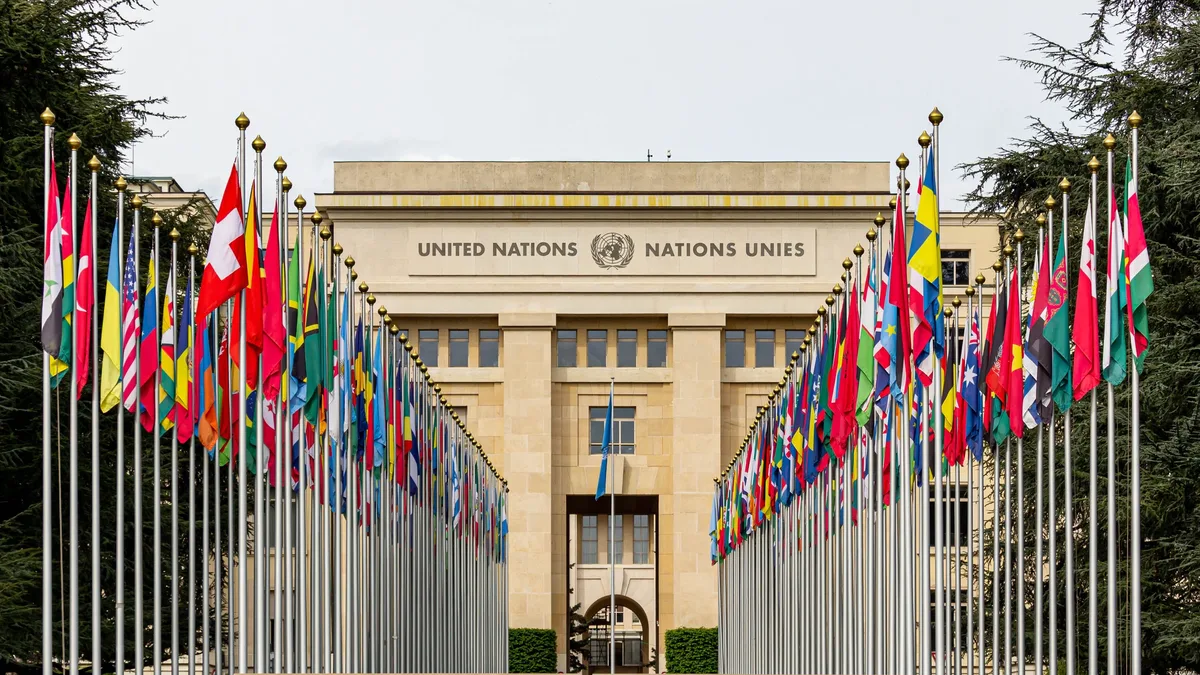
The UN Human Rights Council renewed the mandates of the Fact-Finding Mission and OHCHR office in Venezuela for two years, a move highlighting ongoing...
UN Rights Council Extends Bennett and Katzarova Mandates
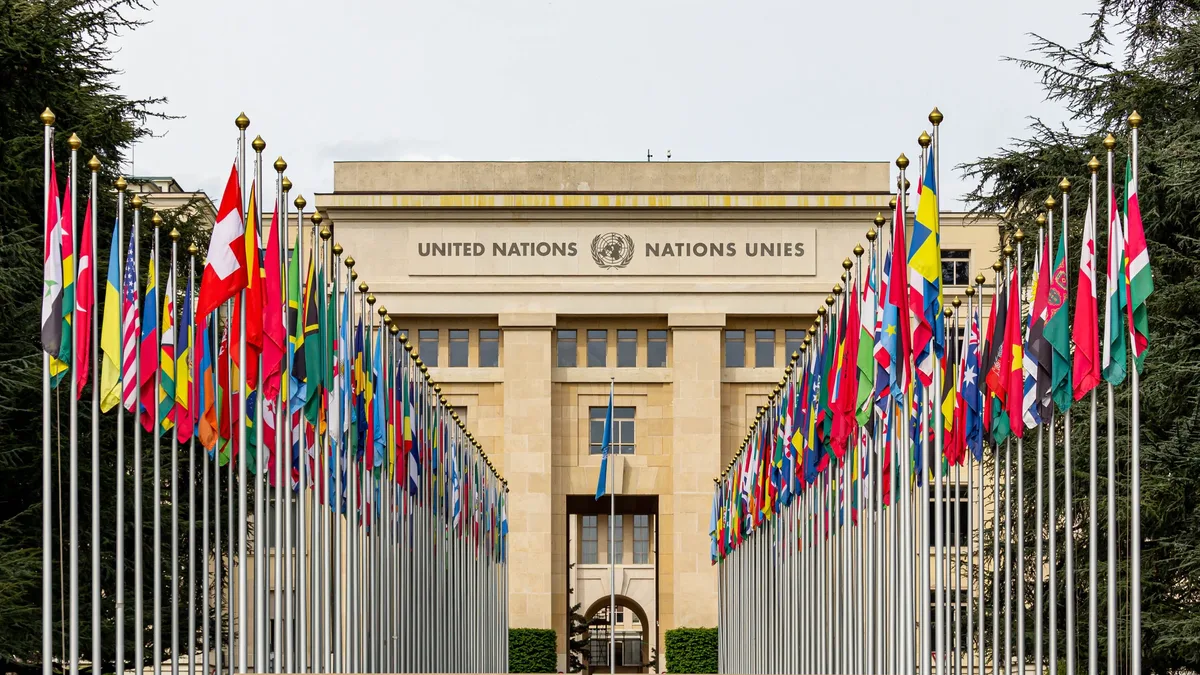
The UN Human Rights Council renewed the mandates of its special rapporteurs on Afghanistan and Russia in October 2026, maintaining international...