Climate Displacement
| Right | Climate Displacement |
|---|---|
| Violation documented | Forced relocation due to climate change impacts |
| Mechanism for remedy | Recognition, protection, and assistance under international frameworks |
| Legal status | Emerging, not universally codified in binding law |
| Primary drivers | Sea-level rise, extreme weather events, desertification, permafrost thaw |
| Typical scale | Individual, household, community, or mass displacement |
| Timeframe of displacement | Can be temporary, seasonal, long-term, or permanent |
| Key frameworks | UNFCCC, UN Guiding Principles on Internal Displacement, Global Compact for Refugees |
Origin and history
Climate displacement as a documented phenomenon originates from low-lying island nations and coastal regions, particularly in the Pacific and the Bay of Bengal. Its systematic observation and linkage to anthropogenic climate change began in earnest in the late 20th century. The term itself gained formal recognition through the work of international bodies like the Intergovernmental Panel on Climate Change (IPCC) from the 1990s onward. Early documented cases include community relocations in the Carteret Islands of Papua New Guinea, initiated over decades. The concept evolved from being viewed as a natural disaster consequence to a specific human rights and protection challenge. Historical precedents exist, but the scale and permanence linked to sea-level rise, desertification, and intensified storms are a modern development.
What it is for
The concept of the right to be protected from climate displacement serves to secure legal and practical safeguards for individuals and communities forced to move due to climate change impacts. It is for ensuring people are not left without legal status, assistance, or a means to reclaim their livelihoods after displacement. This right aims to provide a framework for planned relocation and migration that upholds dignity, cultural integrity, and self-determination. It is for holding states and the international community accountable for providing protection and solutions. The right functions to bridge gaps in existing international law, which does not formally recognize "climate refugees." Ultimately, it is for preventing statelessness and human rights violations that arise from unmanaged, forced displacement triggered by environmental degradation.
Overview
Climate displacement refers to the forced movement of people from their habitual homes due to sudden-onset disasters like floods and storms, or slow-onset processes like sea-level rise and desertification. This displacement can be internal, within a country's borders, or cross-border, though no specific international legal category exists for the latter. The violation documented is the failure of existing legal and institutional frameworks to adequately protect these individuals, leading to rights abuses. These abuses include loss of housing, livelihood, access to clean water, health, and culture, often exacerbated by poor governance and existing social vulnerabilities. The primary mechanism sought for remedy is the development of new legal instruments, policies, and funding arrangements specifically tailored to climate-induced movement. This includes frameworks for planned relocation, adaptive migration pathways, and expansion of protection criteria under refugee and human rights law.
What to know
Key drivers include sea-level rise rendering coastal and island territories uninhabitable, increased frequency and severity of weather disasters, and prolonged droughts that destroy agricultural viability. Displacement is often not a single event but a process of gradual erosion of living conditions, leading to eventual forced migration. Vulnerable populations, including indigenous communities, small-scale farmers, and residents of informal settlements, are disproportionately affected due to pre-existing socioeconomic marginalization. Legal grey areas are significant, as the 1951 Refugee Convention does not cover climate displacement, leaving many cross-border movers without guaranteed protection. The principle of state sovereignty complicates international responsibility, as there is no obligation for other states to admit those displaced by climate factors. Planned relocation, while a potential remedy, is itself fraught with challenges including cultural disruption, land disputes, and inadequate resources, making it a last-resort option.
Common questions
Is there such a thing as a "climate refugee" under international law? No, the legal term "refugee" is strictly defined by persecution, leaving those displaced solely by climate without that formal status. Can people be displaced by slow-onset climate events? Yes, processes like salinization of freshwater lenses or desertification can make areas uninhabitable over years, forcing gradual but permanent migration. Are island nations like Kiribati and Tuvalu already experiencing displacement? Yes, these nations are actively implementing migration and relocation strategies as a direct response to sea-level rise and coastal erosion. Who is responsible for assisting displaced people? The primary responsibility lies with the affected state, but there is growing advocacy for a shared international responsibility, particularly from high-emission nations. Does buying property elsewhere constitute a solution? For some with resources, it is an adaptive strategy, but it does not address the legal protection needs or the plight of those without means. Can people be forced to relocate against their will? In extreme cases, governments may mandate relocation for safety, which raises serious concerns about consent and the protection of community rights.
Pros and cons
A primary pro of formally recognizing a right against climate displacement is that it creates a legal imperative for prevention, protection, and solution-finding, potentially unlocking dedicated funding and coordinated action. It provides a moral and legal framework to advocate for vulnerable populations who are otherwise invisible in international law. A significant con is the immense political and practical difficulty in establishing binding international agreements, as states are reluctant to accept new obligations or cede sovereignty on migration. Another con is the risk of poorly implemented planned relocations, which can replicate or worsen vulnerabilities, destroy social cohesion, and lead to conflict over resources in receiving areas. A common mistake is focusing solely on cross-border displacement, while the vast majority of movement is internal, requiring robust national policy frameworks that are often lacking. Those who may regret certain approaches are communities subjected to top-down relocation plans that disregard their cultural ties to land and fail to provide sustainable livelihoods in new locations.
Who it suits
This right primarily suits populations in geographically vulnerable areas whose governments lack the capacity or will to protect them, such as residents of low-lying coastal deltas and arid regions. It suits indigenous communities whose cultural identity and survival are intrinsically linked to specific territories that are becoming uninhabitable. The framework suits advocates and legal scholars seeking to develop coherent, rights-based responses to a defining challenge of the century. It also suits policymakers in donor nations and international institutions who require a structured concept around which to organize funding and programmatic responses. Conversely, it is less immediately suited to states that are major historical emitters but resistant to legal liability, or to states with rigid immigration policies unwilling to expand protection categories. The concept ultimately suits a global governance system that is prepared to innovate beyond traditional refugee law to address a novel, collective-action problem.
Latest Climate Displacement news
Latest reporting

Pacific Leaders Demand Climate Action at UN
The prime ministers of Papua New Guinea and Solomon Islands have demanded industrial nations stop 'empty promises' and cut emissions, framing climate
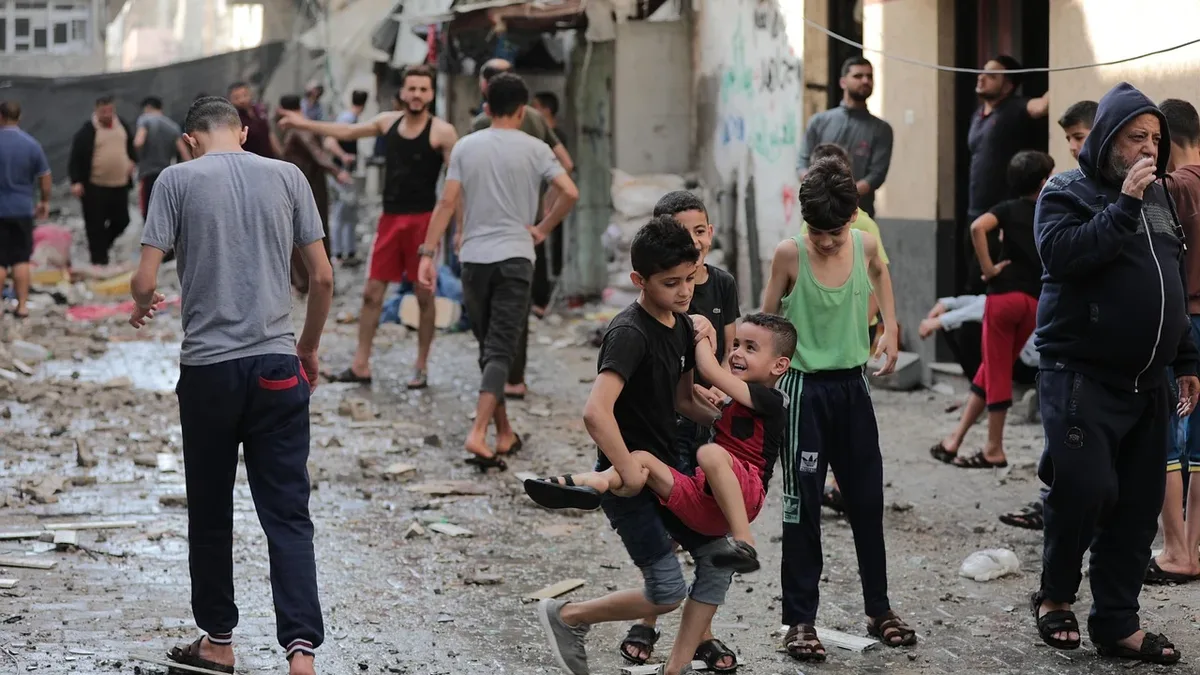
Haiti Gang Violence Forces Mass Displacement
Armed gangs attacked Haiti's Centre Department in 2025, killing many and displacing 147,000 people. An IOM relocation program has moved over 350...
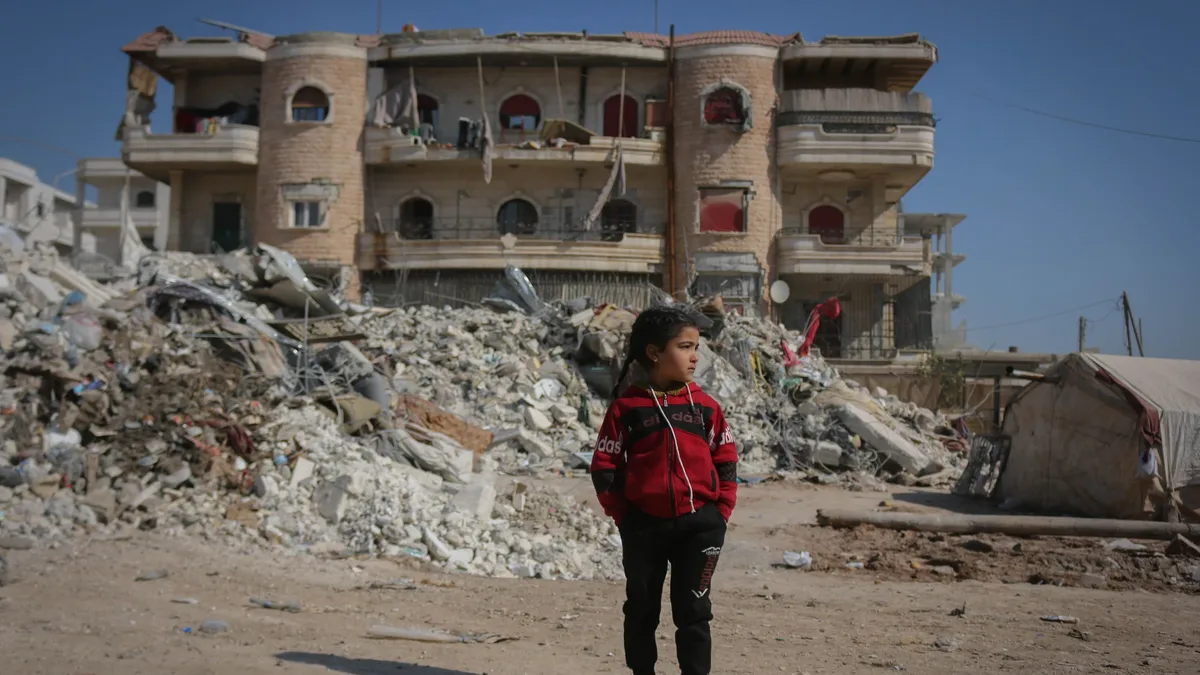
Venezuela Earthquakes Harm Children's Rights
A double earthquake in June has left nearly 3.9 million Venezuelan children facing trauma, displacement, and food insecurity, with weakened state...

West Bank: Israel-Backed Settler Violence Drives Displacement
Escalating settler attacks in the West Bank have led to the displacement of 107 communities, with many more at risk of erasure, according to Human...