Haiti Gang Violence Forces Mass Displacement
Armed gangs attacked Haiti's Centre Department in 2025, killing many and displacing 147,000 people. An IOM relocation program has moved over 350 families from overcrowded schools to a new transit center.
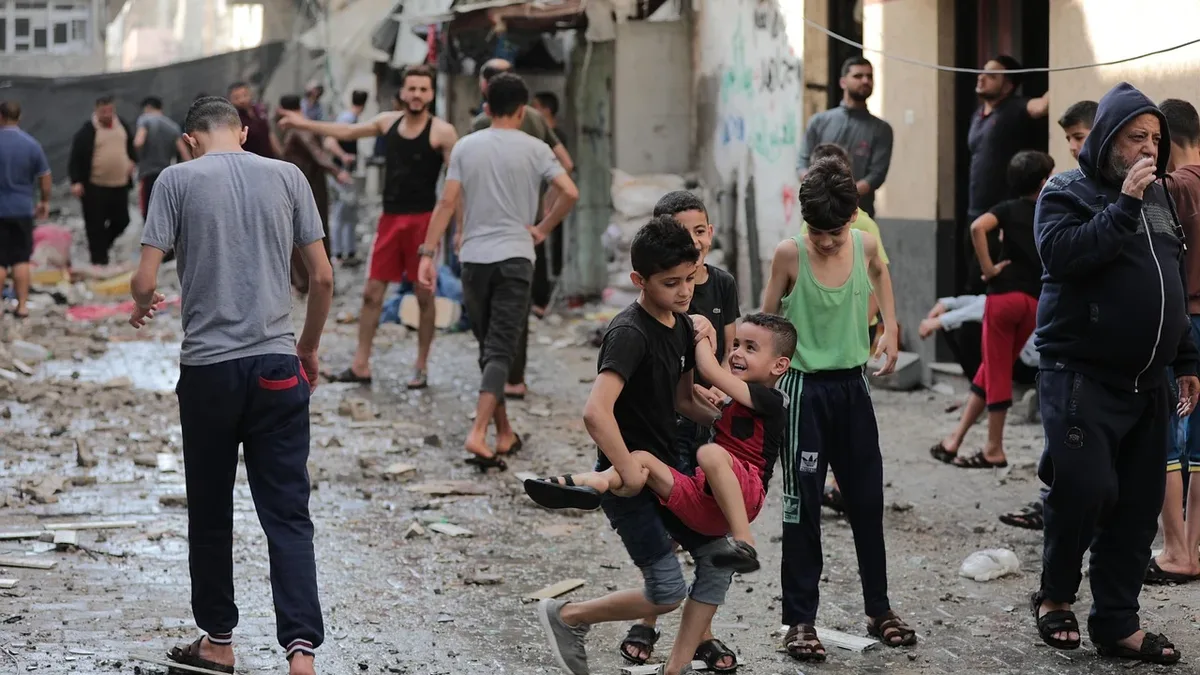
Armed gangs led by Jeff Larose and Wilson Joseph attacked Haiti's Centre Department between March 30 and April 3, 2025. The violence, which targeted Mirebalais and Saut d'Eau, killed many people and forced approximately 147,000 residents to flee their homes, according to reports from the International Organization for Migration, the United Nations Integrated Office in Haiti, and the United Nations Office for the Coordination of Humanitarian Affairs.
Before 2023, the Centre Department was considered peaceful and safe, unlike the West and Artibonite departments. That changed on September 25, 2023, when the Mirebalais University Hospital suffered its first gang attack. The region, which shares a border with the Dominican Republic, had previously been a refuge for people escaping violence in Port-au-Prince.
Escalation of Violence and Forced Displacement
The 2025 attacks were systematic. Gang members looted personal belongings and household property before setting homes and farms on fire. They destroyed police stations, freed prisoners, burned businesses, and looted the hospital. Thousands fled to other communes within the department, including Hinche, Belladère, and Maissade.
Most residents from communes like Mirebalais and Saut d'Eau had to move to neighbouring areas. They stayed in public spaces like schools, where conditions were very difficult due to overcrowding and a lack of hygiene. Families were staying in classrooms with as many as 15 other households, with up to 70 people sharing a single room.
A Relocation Program Offers Temporary Relief
On June 5 this year, the IOM, in partnership with Haiti's northern civil protection agency and with support from the United States Embassy, established a relocation programme. It allowed more than 350 displaced families to move from two school-based sites in Hinche to a new transit centre.
Loukas Garanis, an IOM Field Emergency Officer, described the new site. It is composed of 20 hangars with 14 separated rooms. The facility has eight sanitation blocks, each with three latrines and three showers. There is an open space for children, about 80 solar lamps, six 1,000-gallon water tanks, and a big communal kitchen.
Displaced women expressed relief. Marie Christiane said her previous shelter in a school had standing water and an unbearable smell, exposing her to serious health risks. Madelene, another victim, said she used to sleep in an open-air hallway exposed to the cold and lacked space to change her clothes. The move allows more than 1,000 students to return to their classrooms this September.
Ongoing Terror and a Fragile Security Balance
Despite the relocation, part of the Centre Department remains occupied by armed gangs. They continue to extort the population through illegal checkpoints, identity checks, cargo truck hijackings, and kidnappings. Women and girls face rape and sexual assault.
The gangs target suspected police informants, members of self-defence brigades, and journalists or influencers who denounce them. They execute those caught breaking their rules, violence that sometimes extends to their own gang members.
A combination of armed self-defence groups, the Haitian National Police, and members of the Brigade for the Security of Protected Areas and the Armed Forces of Haiti now occupy key areas. This presence has, thus far, prevented the gangs from taking over the entire region.