France's Mayotte Fails Children's Rights
As schools reopen, over 15,000 children in Mayotte are excluded from education due to systemic failures. French politicians, including Edouard Philippe, propose further restricting migrant rights instead of addressing chronic underinvestment.
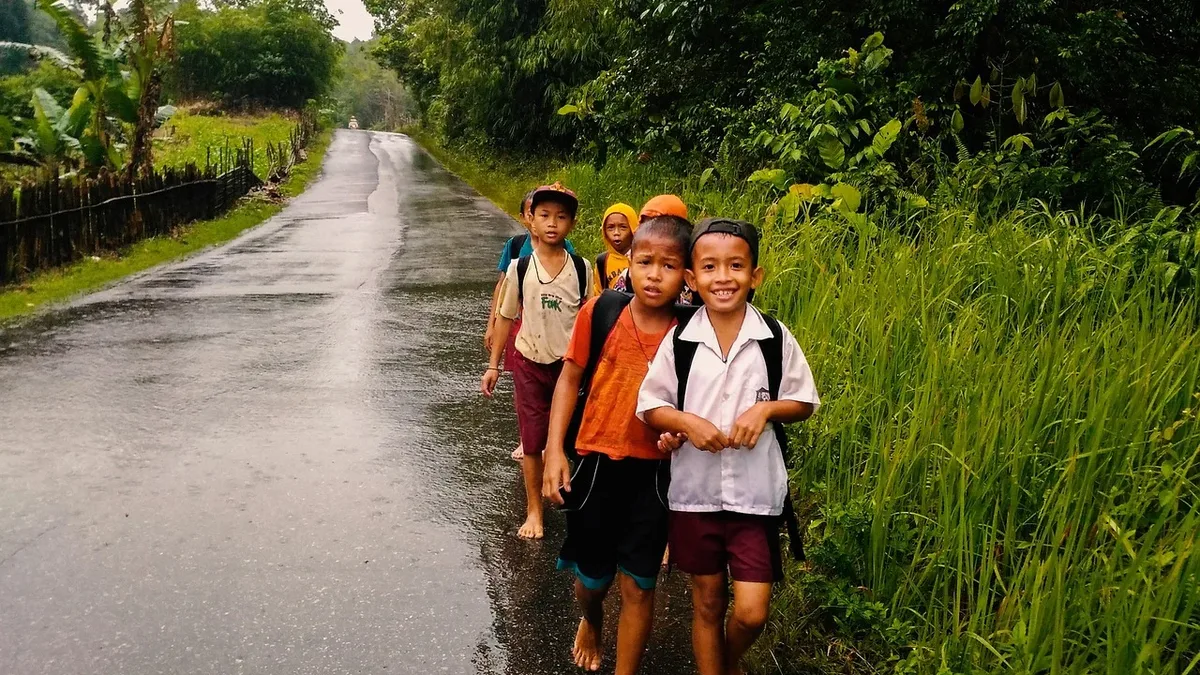
Students are returning to overcrowded and ill-equipped schools in France's overseas department of Mayotte this week. The education system continues to fail thousands of children, a situation worsened by a devastating cyclone in December 2024.
Many schools still operate on rotation systems, with reconstruction efforts failing to address core deficiencies. Even before the cyclone, burdensome enrolment procedures and other barriers kept children out of classrooms. The Mayotte Observatory on School Exclusion found that at the start of the 2025 school year, more than 15,000 school-age children were not in school. This number continues a worrying upward trend.
Systemic neglect violates basic rights
Children who do attend school often face conditions that fall short of basic standards. According to the Human Rights Watch source report, these include a lack of access to water, sanitation, and nutritious food. A safe learning environment is not guaranteed. These failures stem from chronic underinvestment in public services and longstanding structural inequalities on the island.
Rather than tackling these issues, political leaders have blamed Mayotte's challenges on migration. Immediately after the 2024 cyclone, French President Emmanuel Macron vowed to restrict undocumented migration, mainly from Comoros and East Africa. Just before this week's school return, former Prime Minister and 2027 presidential candidate Edouard Philippe declared he would suspend access to asylum and immigration based on family ties in Mayotte. He also targeted droit du sol, the principle of citizenship by birth on French territory.
Proposed restrictions conflict with human rights law
These proposals are presented as solutions for France's poorest department. Yet the island's exceptional laws, including restrictive citizenship and immigration measures, have done little to improve living conditions. They have not addressed the lack of access to housing, water, electricity, healthcare, and education faced by many residents.
The policies raise serious legal concerns. Human Rights Watch states they conflict with protections guaranteed under French constitutional law, European Union law, and international human rights standards. The focus on further restricting rights ignores the root causes of the crisis.
As Prime Minister Sébastien Lecornu begins a two-day visit to Mayotte, French authorities are urged to move beyond migration-focused rhetoric. Concrete measures are needed to guarantee economic and social rights for all residents. Ensuring every child can go to school would be a far more meaningful investment in Mayotte's future. It would also uphold fundamental human rights covenants.